Chinese Legislature Seeks Public Comment on 12 Bills: Cybersecurity, Foreign Trade, Ethnic Unity, Corporate Bankruptcy, Environmental Code, Standard Chinese Language & More

China’s national legislature, the Standing Committee of the National People’s Congress (NPCSC), is soliciting public comment on the following twelve bills through October 11, 2025.

Draft NameChinese TextExplanatory Document
Hazardous Chemicals Safety Law (2nd Draft)
危险化学品安全法草案二次审议稿
PDFPDF
Ecological and Environmental Code – General Part (2nd Draft)
生态环境法典总则编草案二次审议稿
PDFPDF
Ecological and Environmental Code – Part on Ecological Conservation (2nd Draft)
生态环境法典生态保护编草案二次审议稿
PDFPDF
Ecological and Environmental Code – Part on Green and Low-Carbon Development (2nd Draft)
生态环境法典绿色低碳发展编草案二次审议稿
PDFPDF
Law on National Development Plans (2nd Draft)
国家发展规划法草案二次审议稿
PDF · 🆚PDF
Prisons Law (2nd Draft Revision)
监狱法修订草案二次审议稿
PDF PDF
Cybersecurity Law (Draft Amendment)
网络安全法修正草案
PDF · 🆚PDF
Law on Promoting Ethnic Unity and Progress (Draft)
民族团结进步促进法草案
PDFPDF
Enterprise Bankruptcy Law (Draft Revision)
企业破产法修订草案
PDF 🆚PDF
Law on the Standard Spoken and Written Chinese Language (Draft Revision)
国家通用语言文字法修订草案
PDF · 🆚PDF
Environmental Protection Tax Law (Draft Amendment)
环境保护税法修正草案
PDFPDF
Foreign Trade Law (Draft Revision)
对外贸易法修订草案
PDF 🆚PDF

English translations will be provided if available. All explanatory documents are in Chinese and compiled in a single PDF; the links above will take you to the corresponding pages in the PDF only if you use a desktop browser—this does not work on a phone or a tablet.

Continue reading “Chinese Legislature Seeks Public Comment on 12 Bills: Cybersecurity, Foreign Trade, Ethnic Unity, Corporate Bankruptcy, Environmental Code, Standard Chinese Language & More”
NPCSC Session Watch (Extra): Ethnic Unity Law & Foreign Trade Law Overhaul

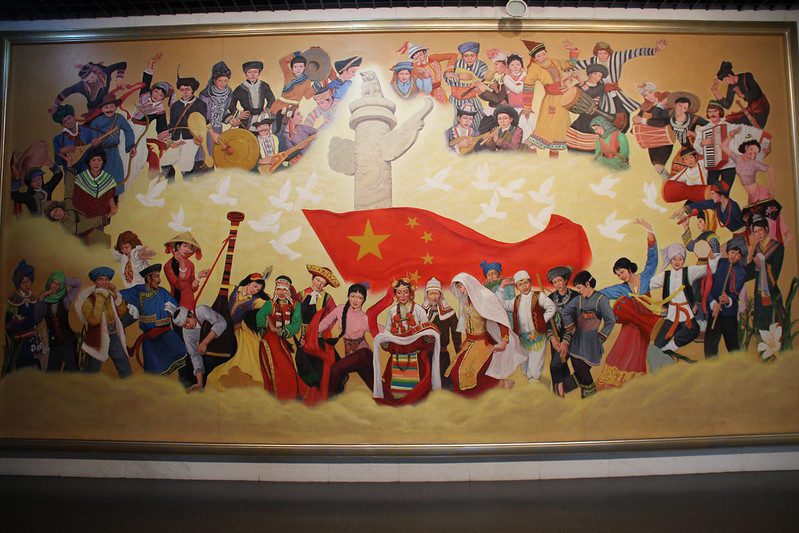
Mural of China’s ethnic minorities on display at the National Museum of Chinese Writing in Anyang, Henan Province. Photo by Gary Todd. CC 0 1.0.

China’s national legislature, the 14th NPC Standing Committee (NPCSC) is holding its seventeenth session from today to Friday, September 12. As we have previewed, it is considering a whopping 16 draft laws, in addition to other agenda items. Today’s official readout of the session’s opening meeting reveals that the NPCSC is reviewing two other bills as well: a draft Law on Promoting Ethnic Unity and Progress [民族团结进步促进法] and a draft revision to the Foreign Trade Law [对外贸易法]. We will take a quick look at these bills below, based on latest state-media reporting. The caveat is that such reports are essentially condensed versions of the bill’s official explanation, which in turn presents a selective summary of the draft itself. Those interested should consult the original texts (of the drafts and their accompanying explanations) when they are released on Friday. Below, we will also provide an update on the other bills under review.

Continue reading “NPCSC Session Watch (Extra): Ethnic Unity Law & Foreign Trade Law Overhaul”

NPC Calendar: September 2025

Here is our recap of NPC-related events in September 2025 at our newsletter.

The revised Law on the Prevention and Control of Infectious Diseases [传染病防治法] (adopted on Apr. 30, 2025) takes effect on September 1.

The 14th NPC Standing Committee will convene for its 17th session from September 8 to 12. It will review the following bills:

For more information on the session’s agenda, please see this post.

NPCSC Session Watch: Cybersecurity, Environmental Tax, Bankruptcy, Arbitration & Mandarin Chinese Promotion

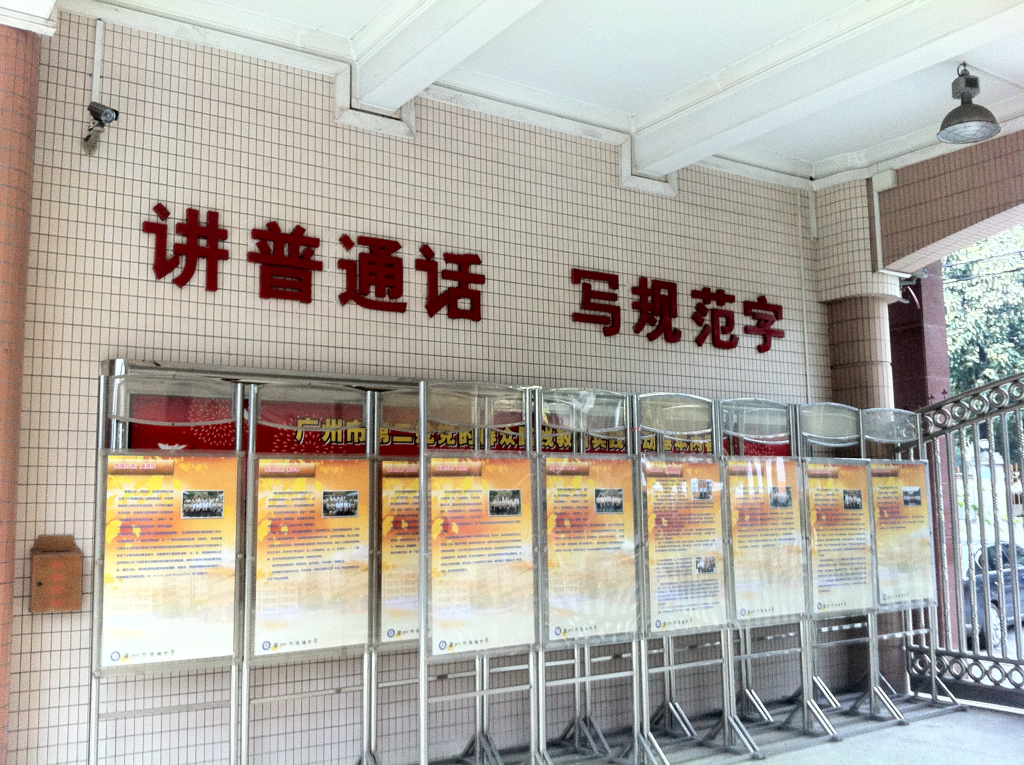
A slogan reading “Speak Putonghua, Write Standard Characters” in a Guangzhou secondary school. Photo by Gzdavidwong (Wikimedia Commons). CC BY-SA 3.0.

China’s top legislature, the 14th NPC Standing Committee (NPCSC), will convene for its seventeenth session from September 8 to 12, the Council of Chairpersons decided on Tuesday, August 26. According to the Council’s proposed agenda, the session will consider 16 legislative bills—the most so far during this five-year term—and hear 8 oversight reports, among other business. As usual, we preview the session’s legislative agenda in detail below.

Continue reading “NPCSC Session Watch: Cybersecurity, Environmental Tax, Bankruptcy, Arbitration & Mandarin Chinese Promotion”

China’s Revised Law of Public Order Offenses (Part 2): Key Changes in General Principles, Offenses, and Procedures

Photo by Michael Gellner (stock.adobe.com)

This post is the second and final part of our coverage of China’s revised Public Security Administration Punishments Law (PSAPL) [治安管理处罚法], approved by the Standing Committee of the National People’s Congress (NPCSC) on June 27 and set to go into effect on New Year’s Day. As introduced in Part 1 in more detail, the PSAPL authorizes the police to punish what are deemed minor offenses against the public order through administrative processes outside the criminal justice system. Part 1 focuses on several broader issues that arose during the revision process: the use of administrative detention, the availability of detention hearings, and the vagueness of certain offenses. This part will more comprehensively survey the changes in the revision, though it is still not intended to be exhaustive.

The PSAPL can be roughly divided into three parts: general rules on liability and punishment; offenses and penalties; and procedures for investigating and penalizing public security violations. This post will proceed in the same order. We will draw on Jeremy Daum’s overview of the revision’s first draft as well as a recent explainer by the NPCSC Legislative Affairs Commission (LAC).1 For additional information on the revised PSAPL, please see this English translation by China Law Translate or this Chinese-language comparison chart we have prepared. Inline page citations are to the LAC article, while inline statutory references are to the revised PSAPL unless context indicates otherwise.

Continue reading “China’s Revised Law of Public Order Offenses (Part 2): Key Changes in General Principles, Offenses, and Procedures”

China’s Revised Law of Public Order Offenses (Part 1): Physical Liberty, Due Process, and Speech vs. Public Security Administration

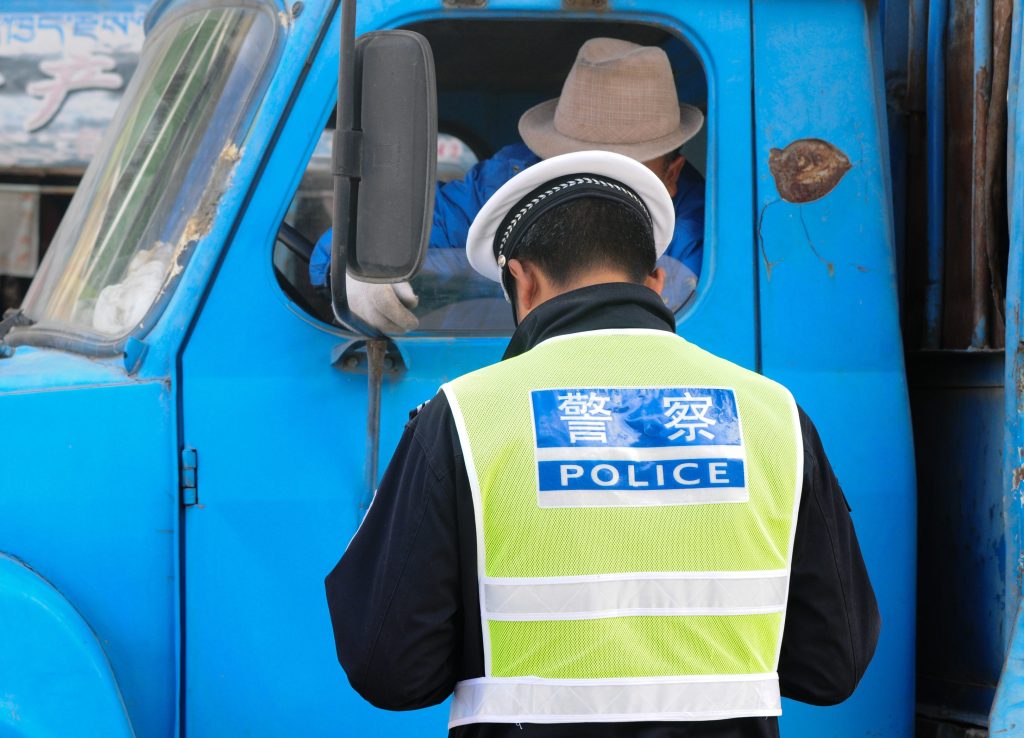
Chinese traffic police officer stands on duty on the street in Beijing. Photo by Phuong (stock.adobe.com).

On June 27, 2025, China’s national legislature, the Standing Committee of the National People’s Congress (NPCSC), approved an overhaul of the 2005 Public Security Administration Punishments Law (PSAPL) [治安管理处罚法], bringing a 12-year legislative marathon to a close. The revised PSAPL will enter into force on January 1, 2026.

The PSAPL sits at the intersection of Chinese criminal law and administrative law. On the one hand, it is a penal statute that defines “violations of public security administration”: relatively minor public order offenses that generally correspond to more serious “crimes” in the Criminal Law [刑法]. These violations are punishable with warnings, fines, license revocations, and even detention of up to 15 days (or up to 20 days for multiple offenses). The PSAPL also lays down the procedures for investigating and punishing the violations, so it is like the Criminal Law and the Criminal Procedure Law [刑事诉讼法] rolled into one. On the other hand, the PSAPL skirts the normal criminal justice process, authorizing the police to penalize public security violations by themselves through nominally administrative proceedings. It incorporates most of the procedures under the Administrative Punishments Law [行政处罚法] and the Administrative Coercion Law [行政强制法]—which regulate, respectively, administrative punishments (e.g., fines and detention) and coercive administrative measures (e.g., investigative restraints on physical liberty and property seizures)—while adapting them to the public security context.

As the first meaningful update of the PSAPL in 20 years, the revision has introduced too many changes to recount individually. To summarize, it has tweaked the general rules of liability and punishments; added around 30 new offenses to the original 152 and modified about 20 others; increased fines across the board; and refined investigatory and decisionmaking procedures.

We will cover the revision in two parts. In this first part, we will delve into a few major changes (or sets of changes), drawing on a recent explainer by Zhang Yijian, a division head in the Office for Criminal Law within the NPCSC Legislative Affairs Commission (LAC).1 Though necessarily biased and self-congratulatory—the article portrays a legislature that tempered the more aggressive draft prepared by the Ministry of Public Security (MPS)—it explains in detail why certain changes were or weren’t made, offers glimpses of behind-the-scenes debates, and candidly acknowledges some flaws in the PSAPL regime. In the next part, we will take a more comprehensive look at the changes but without detailed analysis.

Continue reading “China’s Revised Law of Public Order Offenses (Part 1): Physical Liberty, Due Process, and Speech vs. Public Security Administration”

NPC Calendar: August 2025

Here is our recap of NPC-related events in August 2025 at our newsletter.

UPDATE (July 31, 2025, at 08:56 EDT): The State Council on July 31 approved a draft Cultivated Land Protection and Quality Improvement Law [耕地保护法和质量提升法], which the session is likely to review as well.

The 14th NPC Standing Committee will convene for its seventeenth session in late August. The Council of Chairpersons is expected to meet in mid-August to decide on the agenda and dates of the session.

According to the NPCSC’s 2025 legislative work plan, the draft Financial Stability Law [金融稳定法] will return for further review.

One or more of the following bills may also return for further review:

Finally, the session may take up one or more of the bills scheduled for initial review this year under the NPCSC’s 2025 legislative work plan.

NPC Calendar: July 2025

Here is our recap of NPC-related events in July 2025 at our newsletter.

The revised Mineral Resources Law [矿产资源法] (adopted on Nov. 8, 2024) takes effect on July 1.

The NPC Standing Committee is seeking public comment on the following bills through July 25:

It will meet for its next regularly scheduled session in late August.

NPCSC Session Watch: Public-Order Offenses, Unfair Competition, Community Governance, Social Welfare, Food Safety & Law Propaganda

UPDATE (June 27, 2025): On June 27, the NPCSC approved revisions to the Public Security Administration Punishments Law (effective Jan. 1, 2026) and to the Anti–Unfair Competition Law (effective Oct. 15, 2025). It also removed Miao Hua as a member of the PRC Central Military Commission and ratified the Convention on the Establishment of the International Organization for Mediation, among the other actions taken.

Image by bakhtiarzein (stock.adobe.com)

China’s top legislature, the 14th NPC Standing Committee (NPCSC), will convene for its sixteenth session from June 24 to 27, the Council of Chairpersons decided on Monday, June 16. According to the Council’s proposed agenda, the session will consider twelve legislative bills, hear three oversight reports, and ratify the Convention on the Establishment of the International Organization for Mediation—which China signed on May 30 as a founding member. As usual, we preview the session’s legislative agenda in detail below.

Continue reading “NPCSC Session Watch: Public-Order Offenses, Unfair Competition, Community Governance, Social Welfare, Food Safety & Law Propaganda”

Chinese Legislature’s 2025 Oversight Agenda: “New Quality Productive Forces,” Government Debt, Climate Action, Food Safety, Gig Worker Rights & More

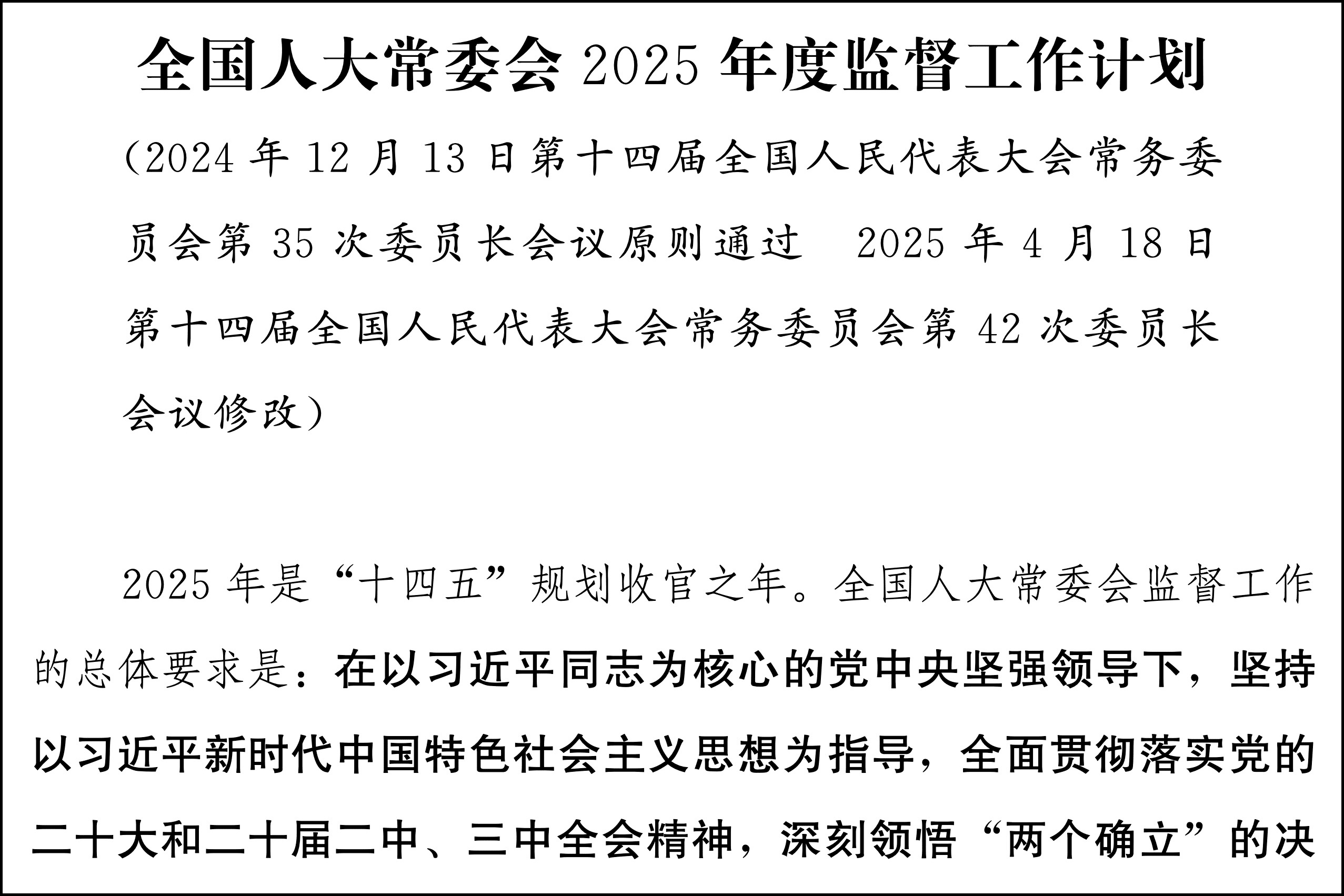
Caption and opening lines of the NPCSC’s 2025 oversight plan.

A few weeks ago, on May 14, 2025, China’s national legislature, the NPC Standing Committee (NPCSC), released its 2025 oversight plan. Today, after an eight-year hiatus, we are resuming coverage of this annual document on this site. We begin with some background before delving into the 2025 plan itself.

The full NPCSC conducts oversight primarily by reviewing reports, either submitted by the state organs subject to its oversight or produced by its subordinate bodies. Every year since 2010, it has also held two or three “special inquiries” [专题询问]—essentially Q&A sessions where lawmakers question officials on specific issues—to supplement its review of selected reports. These inquiries, as well as the follow-up oversight measures available to the NPCSC after it hears a report, are discussed here.

Continue reading “Chinese Legislature’s 2025 Oversight Agenda: “New Quality Productive Forces,” Government Debt, Climate Action, Food Safety, Gig Worker Rights & More”