
NPC 2026: China Enacts Law on the Formulation and Implementation of Five-Year Plans

UPDATE (Mar. 12, 2026): We updated this post in accordance with the Law’s final text. The original version is archived here.
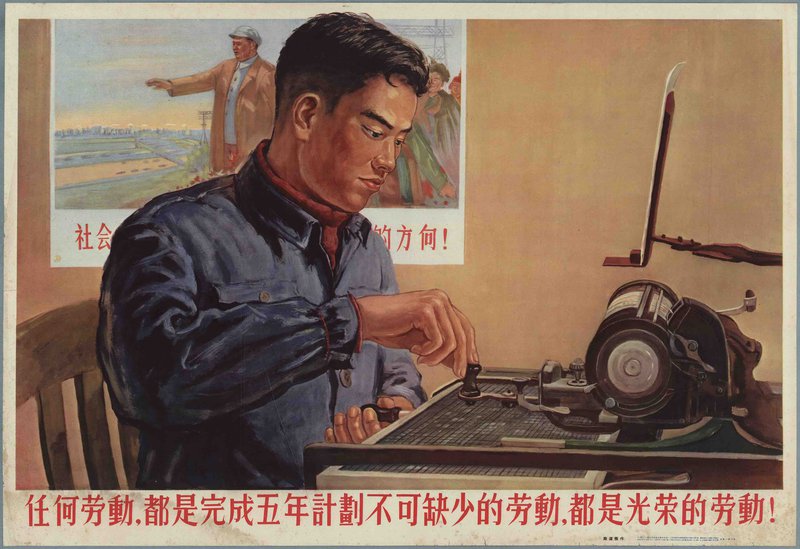
1956 propaganda poster featuring a Chinese typist and the caption “All labor contributes indispensably to the fulfillment of the [First] Five-Year Plan and is glorious work!” Original poster by Zhou Daowu. Photo via The Mao Era in Objects. 🅮 Public domain.

On March 12, 2026, China’s top legislature, the National People’s Congress (NPC), approved the 15th Five-Year Plan (FYP), a roadmap for the nation’s socioeconomic development through 2030. Alongside it, the NPC also adopted the Law on National Development Plans (Law) [国家发展规划法]—the first statute to formalize the procedures for drafting, approving, and implementing FYPs.

Developed over seven decades, the planning process now operates under a mix of written authorities and long-standing customs. In 2018, the Communist Party and the State Council issued a joint opinion imposing a range of procedural and substantive requirements for drafting and implementing FYPs. In 2021, the NPC Standing Committee (NPCSC) overhauled its Decision on Strengthening the Oversight of Economic Work (Oversight Decision) [关于加强经济工作监督的决定]—which governs, among other things, legislative oversight of the planning process. Meanwhile, other features of the process, such as the Party’s quinquennial recommendations for formulating the next FYP, continue as a matter of practice.

The Law codifies that existing regime and regulates the entire lifecycle of an FYP: from drafting (Ch. II) to legislative review and approval (Ch. III), to implementation (Ch. IV) and related oversight activities (Ch. V). Most notably, the Law spells out the Party’s role throughout the planning process. While, unsurprisingly, it contains the now-standard language that national development planning must uphold the Party’s leadership (arts. 3, 5), the Law is the first Chinese statute to assign detailed roles to Party documents and institutions.

UPDATE (Mar. 3, 2026): In a new essay for the Brookings Institution’s John L. Thornton China Center, we further elaborated and commented on the Law’s Party provisions.

Continue reading “NPC 2026: China Enacts Law on the Formulation and Implementation of Five-Year Plans”
NPCSC Session Watch: Environmental Code, Antarctic Policy, Ethnicity & Language, State Assets, Childcare, Banking Regulation & Trademarks

UPDATE (Dec. 22, 2025): The NPCSC has revealed that it will indeed submit the first three bills discussed below to the 2026 NPC session for approval and will pass the draft revisions to the Law on the Standard Spoken and Written Chinese Language and to the Foreign Trade Law on December 27.

Photo by Asya M (stock.adobe.com)

China’s top legislature, the 14th NPC Standing Committee (NPCSC), will convene for its nineteenth session, its final meeting of the year, from December 22 to 27, the Council of Chairpersons decided on Monday, December 15. It will be the longest legislative session—lasting six days—since December 2019, with a suitably packed agenda. The NPCSC will review 14 legislative bills and hear almost two dozen reports, in addition to other business. As usual, we preview the session’s legislative agenda in detail below, while highlighting a few notable reports.

Continue reading “NPCSC Session Watch: Environmental Code, Antarctic Policy, Ethnicity & Language, State Assets, Childcare, Banking Regulation & Trademarks”

NPCSC Session Watch: Cybersecurity, Environmental Tax, Bankruptcy, Arbitration & Mandarin Chinese Promotion

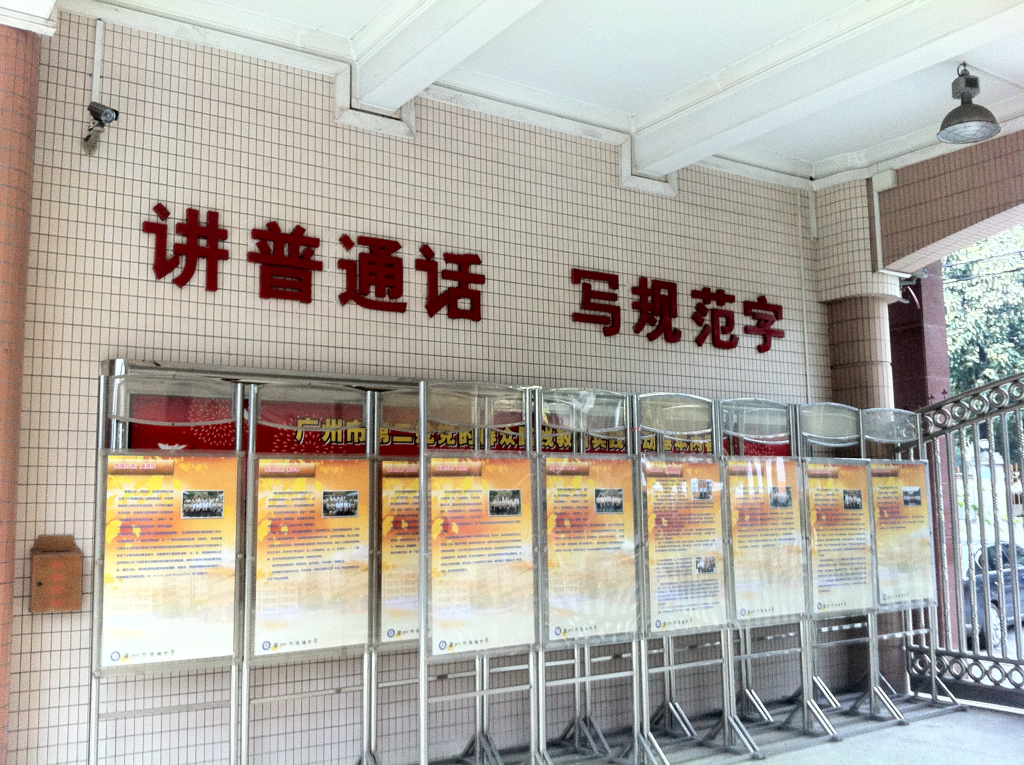
A slogan reading “Speak Putonghua, Write Standard Characters” in a Guangzhou secondary school. Photo by Gzdavidwong (Wikimedia Commons). CC BY-SA 3.0.

China’s top legislature, the 14th NPC Standing Committee (NPCSC), will convene for its seventeenth session from September 8 to 12, the Council of Chairpersons decided on Tuesday, August 26. According to the Council’s proposed agenda, the session will consider 16 legislative bills—the most so far during this five-year term—and hear 8 oversight reports, among other business. As usual, we preview the session’s legislative agenda in detail below.

Continue reading “NPCSC Session Watch: Cybersecurity, Environmental Tax, Bankruptcy, Arbitration & Mandarin Chinese Promotion”

NPCSC Session Watch: Environmental Code, Private Sector Promotion, Arbitration, Enforcement of Prison Sentences & National Development Planning

UPDATE (Apr. 30, 2025): On April 30, the NPCSC approved the Private Economy Promotion Law (effective May 20, 2025); revised the Law on the Prevention and Control of Infectious Diseases (effective Sept. 1, 2025); and adopted a decision authorizing the State Council to temporarily modify a provision of the Seed Law in the Xinjiang Pilot Free Trade Zone (effective May 1, 2025).

Tourists riding bamboo rafts on the Li River in Yangshuo, Guangxi. Photo by Changhao Wei. All rights reserved.

China’s top legislature, the 14th NPC Standing Committee (NPCSC), will convene for its fifteenth session from April 27 to 30, the Council of Chairpersons decided on Friday, April 18. According to the Council’s proposed agenda, the session will consider eight legislative bills, which we preview below. The Council also approved the NPCSC’s 2025 work priorities as well as 2025 plans for legislative, oversight, delegates-related, and foreign-affairs work. We expect all but the foreign-affairs work plan to be released after the upcoming session, likely in early May.

Continue reading “NPCSC Session Watch: Environmental Code, Private Sector Promotion, Arbitration, Enforcement of Prison Sentences & National Development Planning”