China Elevates Environmental Law to an Official Branch of Law

Photo by Pcess609 (stock.adobe.com)

On March 12, 2026, shortly after China’s National People’s Congress (NPC) adopted the Ecological and Environmental Code (Code) [生态环境法典], the legislature separately announced that it had also upgraded “ecological and environmental law” [生态环境法] to an official “branch of [Chinese] law” [法律部门], joining the existing seven, including civil and commercial law and criminal law.

The 9th NPC (1998–2003) was the first to divide Chinese law into official branches. In fall 1997, the Communist Party announced at its 15th Congress the goal of establishing “a socialist system of laws with Chinese characteristics” [中国特色社会主义法律体系] by 2010. This task primarily fell to the national legislature, which decided that, to achieve that goal, it must (among other criteria) enact enough legislation to cover all branches of law, which in turn raised the question of how those branches should be defined.

Continue reading “China Elevates Environmental Law to an Official Branch of Law”

NPC 2026: A First Look at China’s New Environmental Code

UPDATE (Mar. 12, 2026): We have updated this post in accordance with the Code’s final text. The original version is archived here.

Editor’s Note: This post is a collaboration between NPC Observer and a group of Chinese environmental law scholars led by Feng Ge, currently a visiting scholar at the U.S.-Asia Law Institute of NYU School of Law. The other members are Jiaying Deng, Xinyu Jia, Jingxian Zhang, and Gaachi Liang. This post was written by Changhao Wei and draws on materials prepared by those scholars.

Zhangjiajie National Forest Park in Hunan Province. Photo by aphotostory (stock.adobe.com).

On March 12, 2026, China’s National People’s Congress (NPC) adopted the Ecological and Environmental Code (Code) [生态环境法典] to partially codify, with updates, China’s existing environmental laws and regulations. It is China’s second formal legal code, after the 2020 Civil Code [民法典]. The Communist Party views the latter’s enactment as a success. In 2021, Xi Jinping praised it as a “model” for codification and called for codifying other areas of law where “conditions are ripe.”

In fall 2023, the Code was chosen as the next codification project, likely due to its strong political and legal foundations. Environmental protection has been a top priority for the Party under Xi Jinping, whose “Thought on Ecological Civilization” was coined in 2018 as a component of his overarching political thought. China’s environmental law is also fairly well developed. Today, the country boasts over 30 environmental statutes, more than 100 State Council–issued administrative regulations, and many more ministerial rules and policy documents.

Continue reading “NPC 2026: A First Look at China’s New Environmental Code”

NPCSC Session Watch: Environmental Code, Antarctic Policy, Ethnicity & Language, State Assets, Childcare, Banking Regulation & Trademarks

UPDATE (Dec. 22, 2025): The NPCSC has revealed that it will indeed submit the first three bills discussed below to the 2026 NPC session for approval and will pass the draft revisions to the Law on the Standard Spoken and Written Chinese Language and to the Foreign Trade Law on December 27.

Photo by Asya M (stock.adobe.com)

China’s top legislature, the 14th NPC Standing Committee (NPCSC), will convene for its nineteenth session, its final meeting of the year, from December 22 to 27, the Council of Chairpersons decided on Monday, December 15. It will be the longest legislative session—lasting six days—since December 2019, with a suitably packed agenda. The NPCSC will review 14 legislative bills and hear almost two dozen reports, in addition to other business. As usual, we preview the session’s legislative agenda in detail below, while highlighting a few notable reports.

Continue reading “NPCSC Session Watch: Environmental Code, Antarctic Policy, Ethnicity & Language, State Assets, Childcare, Banking Regulation & Trademarks”

NPCSC Session Watch: Procuratorate-Initiated Public Interest Litigation, Community Governance, Cybersecurity, Arable Land Protection & Environmental Code

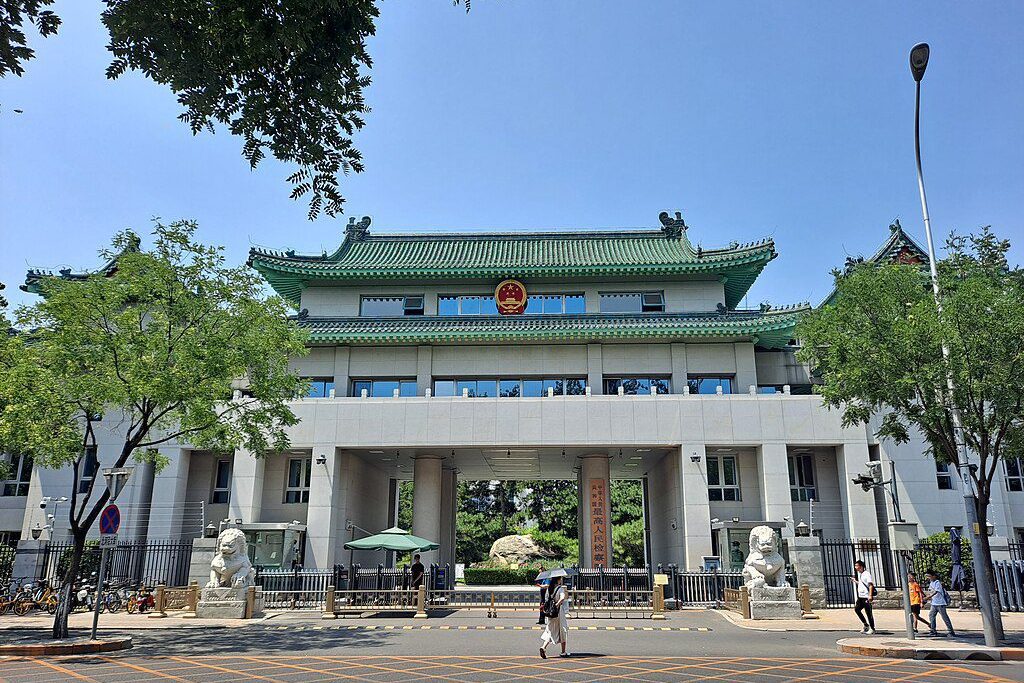
Supreme People’s Procuratorate. Photo by EditQ (Wikimedia Commons). CC BY-SA 4.0.

China’s top legislature, the 14th NPC Standing Committee (NPCSC), will convene for its eighteenth session from October 24 to 28, immediately after the Communist Party’s upcoming Fourth Plenum concludes on October 23, the Council of Chairpersons decided on Wednesday, October 15. According to the Council’s proposed agenda, the session will consider 9 legislative bills and hear 7 oversight reports, among other business. As usual, we preview the session’s legislative agenda in detail below.

Continue reading “NPCSC Session Watch: Procuratorate-Initiated Public Interest Litigation, Community Governance, Cybersecurity, Arable Land Protection & Environmental Code”

NPCSC Session Watch: Cybersecurity, Environmental Tax, Bankruptcy, Arbitration & Mandarin Chinese Promotion

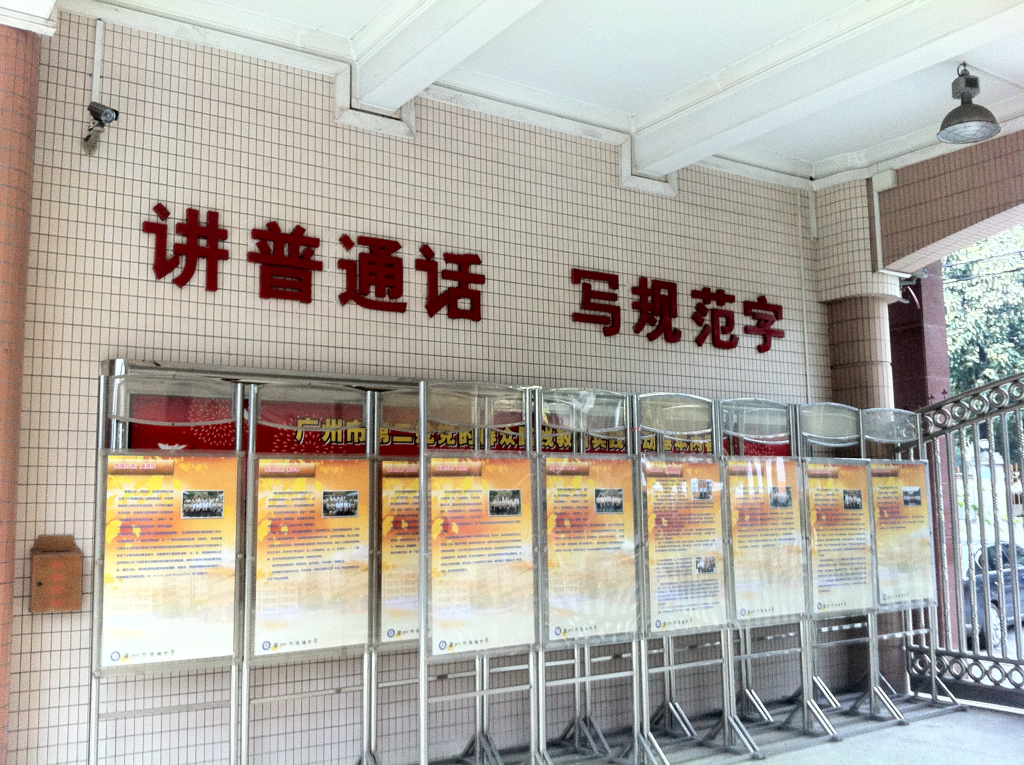
A slogan reading “Speak Putonghua, Write Standard Characters” in a Guangzhou secondary school. Photo by Gzdavidwong (Wikimedia Commons). CC BY-SA 3.0.

China’s top legislature, the 14th NPC Standing Committee (NPCSC), will convene for its seventeenth session from September 8 to 12, the Council of Chairpersons decided on Tuesday, August 26. According to the Council’s proposed agenda, the session will consider 16 legislative bills—the most so far during this five-year term—and hear 8 oversight reports, among other business. As usual, we preview the session’s legislative agenda in detail below.

Continue reading “NPCSC Session Watch: Cybersecurity, Environmental Tax, Bankruptcy, Arbitration & Mandarin Chinese Promotion”

NPCSC Session Watch: Environmental Code, Private Sector Promotion, Arbitration, Enforcement of Prison Sentences & National Development Planning

UPDATE (Apr. 30, 2025): On April 30, the NPCSC approved the Private Economy Promotion Law (effective May 20, 2025); revised the Law on the Prevention and Control of Infectious Diseases (effective Sept. 1, 2025); and adopted a decision authorizing the State Council to temporarily modify a provision of the Seed Law in the Xinjiang Pilot Free Trade Zone (effective May 1, 2025).

Tourists riding bamboo rafts on the Li River in Yangshuo, Guangxi. Photo by Changhao Wei. All rights reserved.

China’s top legislature, the 14th NPC Standing Committee (NPCSC), will convene for its fifteenth session from April 27 to 30, the Council of Chairpersons decided on Friday, April 18. According to the Council’s proposed agenda, the session will consider eight legislative bills, which we preview below. The Council also approved the NPCSC’s 2025 work priorities as well as 2025 plans for legislative, oversight, delegates-related, and foreign-affairs work. We expect all but the foreign-affairs work plan to be released after the upcoming session, likely in early May.

Continue reading “NPCSC Session Watch: Environmental Code, Private Sector Promotion, Arbitration, Enforcement of Prison Sentences & National Development Planning”