
China Amends Common Language Law to Expand Mandarin Use

Entrance to Ihlas Supermarket in Kashgar, Xinjiang on August 19, 2018. The top red banner says, in Chinese and Uyghur, “Communication starts with Putonghua.” The photographer pointed out that “the Chinese term ‘Putonghua’ [was] translated into Uyghur literally as ‘the common language.’” They also noted that the whiteboard seen above the handrail had a bilingual list of hospital-related terms titled “Learn the National Language: One Sentence a Day.” Check out the original photo for details. Photo by Kubilayaxun (Wikimedia Commons). CC BY-SA 4.0.

On December 27, 2025, China’s national legislature, the NPC Standing Committee (NPCSC), approved revisions to the 2000 Law on the Standard Spoken and Written Chinese Language (Standard Language Law or Law) [国家通用语言文字法]—a statute that defines China’s “national common language” and mandates its use across a variety of settings.

The Law’s first overhaul came after the Communist Party under Xi Jinping had elevated “forging a strong sense of community for the Chinese nation” [铸牢中华民族共同体意识] to “the main task for [its] ethnic work and all other initiatives in areas with large ethnic minority populations.” The task’s success hinges on cultivating a “deep” fivefold identification—with the motherland, the Chinese nation, the Chinese culture, the Party, and socialism with Chinese characteristics—among all ethnicities. And the key to such identification is a common language, Xi argues, calling for “comprehensive efforts to popularize the standard spoken and written Chinese language and the use of unified state-compiled textbooks, so as to facilitate shared psyche and future through communication.”

Continue reading “China Amends Common Language Law to Expand Mandarin Use”
NPCSC Session Watch: Environmental Code, Antarctic Policy, Ethnicity & Language, State Assets, Childcare, Banking Regulation & Trademarks

UPDATE (Dec. 22, 2025): The NPCSC has revealed that it will indeed submit the first three bills discussed below to the 2026 NPC session for approval and will pass the draft revisions to the Law on the Standard Spoken and Written Chinese Language and to the Foreign Trade Law on December 27.

Photo by Asya M (stock.adobe.com)

China’s top legislature, the 14th NPC Standing Committee (NPCSC), will convene for its nineteenth session, its final meeting of the year, from December 22 to 27, the Council of Chairpersons decided on Monday, December 15. It will be the longest legislative session—lasting six days—since December 2019, with a suitably packed agenda. The NPCSC will review 14 legislative bills and hear almost two dozen reports, in addition to other business. As usual, we preview the session’s legislative agenda in detail below, while highlighting a few notable reports.

Continue reading “NPCSC Session Watch: Environmental Code, Antarctic Policy, Ethnicity & Language, State Assets, Childcare, Banking Regulation & Trademarks”

NPCSC Session Watch: Cybersecurity, Environmental Tax, Bankruptcy, Arbitration & Mandarin Chinese Promotion

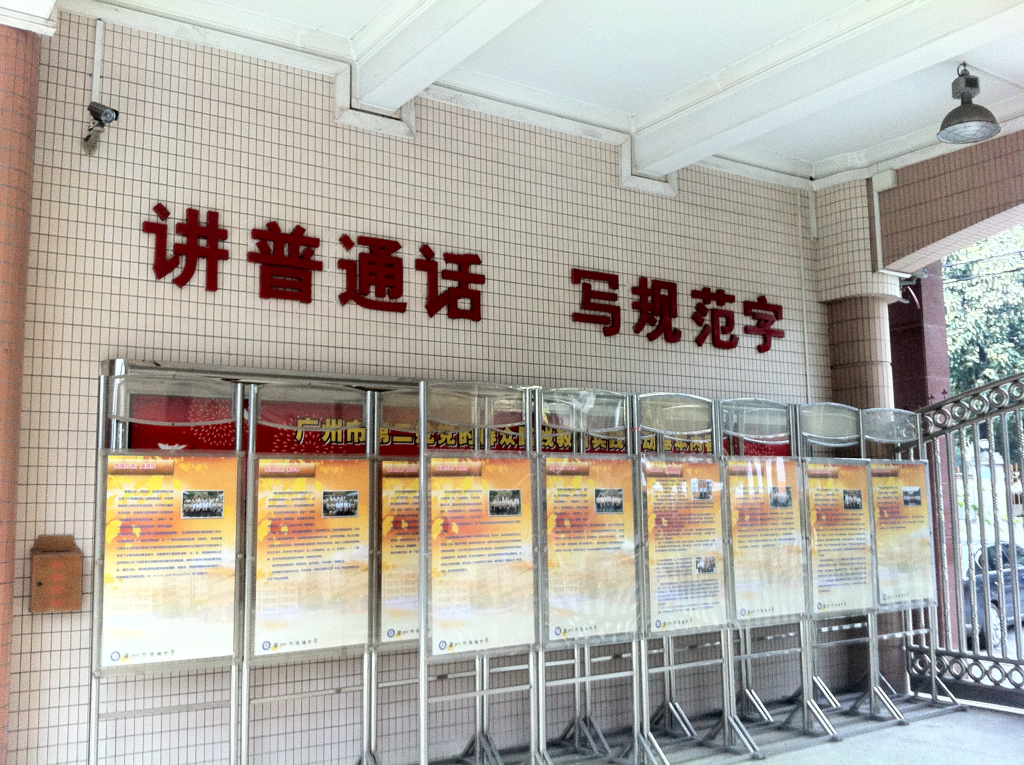
A slogan reading “Speak Putonghua, Write Standard Characters” in a Guangzhou secondary school. Photo by Gzdavidwong (Wikimedia Commons). CC BY-SA 3.0.

China’s top legislature, the 14th NPC Standing Committee (NPCSC), will convene for its seventeenth session from September 8 to 12, the Council of Chairpersons decided on Tuesday, August 26. According to the Council’s proposed agenda, the session will consider 16 legislative bills—the most so far during this five-year term—and hear 8 oversight reports, among other business. As usual, we preview the session’s legislative agenda in detail below.

Continue reading “NPCSC Session Watch: Cybersecurity, Environmental Tax, Bankruptcy, Arbitration & Mandarin Chinese Promotion”