
NPC Calendar: March 2024

Here is our recap of NPC-related events in March 2024 at our monthly newsletter.

The Criminal Law Amendment (XII) [刑法修正案(十二)] (adopted on Dec. 29, 2023) takes effect on March 1.

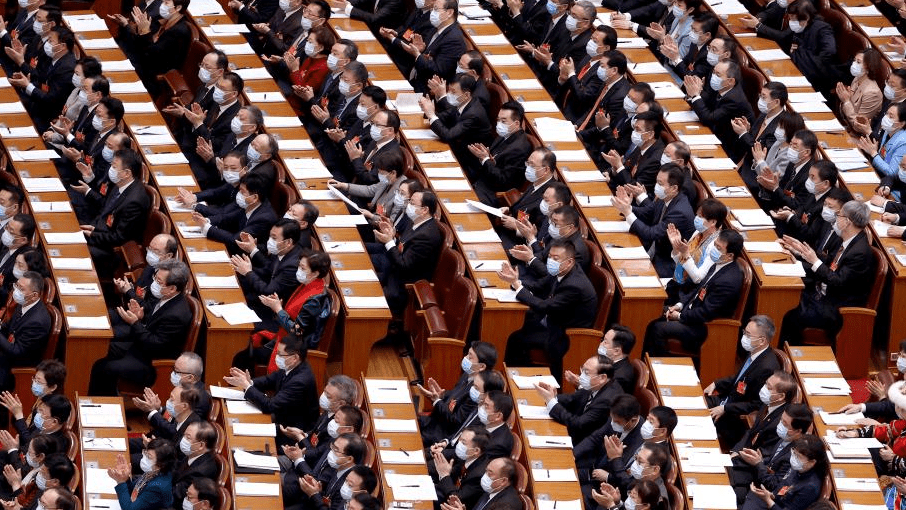
China’s 14th National People’s Congress (NPC) will convene for its second session on Tuesday, March 5. The session’s tentative agenda includes the following items:

  • Deliberate the Government Work Report;
  • Deliberate work reports by the NPC Standing Committee, the Supreme People’s Court, and the Supreme People’s Procuratorate;
  • Review a report on the implementation of the 2023 Plan for National Economic and Social Development and on the draft 2024 Plan for National Economic and Social Development; and review the draft 2024 Plan for National Economic and Social Development;
  • Review a report on the execution of the 2023 Central and Local Budgets and on the draft 2024 Central and Local Budgets; and review the draft 2024 Central and Local Budgets; and
  • Deliberate a draft revision to the State Council Organic Law [国务院组织法].

On March 4, the NPC session will convene for a preparatory meeting to select members of the Presidium (an ad hoc body of around 170 members that will preside over the session) and to finalize the session’s agenda. The Presidium will then immediately meet to decide on the session’s daily schedule and designate a spokesperson. Shortly thereafter the session is expected to hold its first press conference.

If the NPC is going to fill the vacancies on the State Council and the Central Military Commission created by the removal of Qin Gang and Li Shangfu last year, such an agenda item is expected to be first revealed on March 4, either at the press conference or through the session’s agenda and daily schedule.

The NPC’s 2024 session will likely close on March 11, based on a recent notice from the Beijing police on controlling the use of certain low-flying aircraft during the event. All reports and bills submitted for review are expected to be approved on the last day.

NPCSC Session Watch: NPC Preparations and State Secrets Law Revisions

UPDATE (Feb. 27, 2024): The NPCSC on February 27 approved the revision to the Law on Guarding State Secrets, which will take effect on May 1, 2024. An English translation of the revised Law and a Chinese comparison chart are accessible from the bill page.

China’s top legislature, the 14th NPC Standing Committee (NPCSC), will convene for its eighth session from February 26 to 27, the Council of Chairpersons decided on Wednesday, February 7.

As expected, this two-day meeting will primarily make preparations for the NPC’s 2024 session, scheduled to open on March 5. In addition to discussing its annual work report to the NPC, the NPCSC will review a proposed itemized agenda for the 2024 NPC session, among other preparatory matters.

Continue reading “NPCSC Session Watch: NPC Preparations and State Secrets Law Revisions”

Explainer: What Happens to the Delegate Bills Introduced During Annual NPC Sessions?

China’s national legislature, the National People’s Congress (NPC), will convene for its 2024 session in just a month. Such annual gatherings offer the NPC’s almost 3,000 delegates a yearly window to introduce “bills” [议案]. A bill is sponsored by 30 or more delegates or by a delegation, and calls on the legislature itself—not any other Party-state institution—to perform an act, legislative or otherwise. The vast majority of bills have been “legislative bills” [法律案]—that is, they propose to enact, amend, repeal, interpret, or codify laws. During the last two NPCs (2013–2022), the delegates introduced an average of 465 bills per year and all but a few (~98%) were legislative bills.1

Continue reading “Explainer: What Happens to the Delegate Bills Introduced During Annual NPC Sessions?”

Year in Review: The NPC and the Observer in 2023

As we bid farewell to 2023, we reflect on work of the National People’s Congress (NPC) and that of our own in the past year.

Continue reading “Year in Review: The NPC and the Observer in 2023”

NPC Calendar: January 2024

Here is our recap of NPC-related events in January 2024 at our monthly newsletter.

The following laws take effect on January 1:

The NPC Standing Committee (NPCSC) is seeking public comment on the following bills through January 27:

The NPCSC will convene for its next regularly scheduled session in late February.

China’s Top Legislation-Review Body Halts Local Governments’ Collective Punishment of Telecom Fraudsters’ Families

Telecom fraud is a serious problem in China. During the first ten months of 2023, Chinese authorities indicted over 34,000 individuals for telecom fraud and more than 200,000 for related crimes, including aiding telecom fraud and concealing criminal proceeds, according to the Supreme People’s Procuratorate. In 2022, China’s top legislature, the Standing Committee of the National People’s Congress (NPCSC), passed the Law Against Telecom Network Fraud [反电信网络诈骗法] to bolster efforts to combat telecom fraud. The law, among other things, authorizes severe restrictions on scammers’ access to telecom and financial accounts and tools that are often implicated in fraud activities.

Continue reading “China’s Top Legislation-Review Body Halts Local Governments’ Collective Punishment of Telecom Fraudsters’ Families”

NPCSC Seeks Public Comment on 7 Bills: Legislative Oversight, State Council Operation, Border Health, Tariffs, Mineral Resources, Emergency Response & More

China’s national legislature, the Standing Committee of the National People’s Congress (NPCSC), is soliciting public comment on the following seven bills through January 27, 2024:

Draft NameChinese TextExplanatory Document
State Council Organic Law (2nd Draft Revision)
国务院组织法修订草案二次审议稿
PDF · ΔPDF
Emergency Response and Management Law (2nd Draft)
突发事件应对管理法草案二次审议稿
PDFPDF
Rural Collective Economic Organizations Law (2nd Draft)
农村集体经济组织法草案二次审议稿
PDFPDF
Law on the Oversight by the Standing Committees of People’s Congresses at All Levels (Draft Amendment)
各级人民代表大会常务委员会监督法修正草案
PDF ΔPDF
Border Health and Quarantine Law (Draft Revision)
国境卫生检疫法修订草案
PDF ΔPDF
Mineral Resources Law (Draft Revision)
矿产资源法修订草案
PDF ΔPDF
Tariff Law (Draft)
关税法草案
PDF Δ (main text)
PDF (tariff schedule)
⚠️ The schedule is 1,486 pages long and 279 MB in size ⚠️
PDF

English translations will be provided if and when available. All explanatory documents are in Chinese and compiled in a single PDF; the links above will take you to the corresponding pages in the PDF only if you use a desktop browser—this does not work on a phone or a tablet.

Continue reading “NPCSC Seeks Public Comment on 7 Bills: Legislative Oversight, State Council Operation, Border Health, Tariffs, Mineral Resources, Emergency Response & More”

NPCSC Session Watch: Chinese-Style Constitutional Review, Legislative Oversight, Charity Regulation, Border Health, Emergency Management & Mineral Resources (Updated)

China’s top legislature, the 14th NPC Standing Committee (NPCSC), will convene for its seventh session from December 25 to 29, the Council of Chairpersons decided on Monday, December 18. The session’s tentative agenda includes twelve legislative bills, which we preview below.

Continue reading “NPCSC Session Watch: Chinese-Style Constitutional Review, Legislative Oversight, Charity Regulation, Border Health, Emergency Management & Mineral Resources (Updated)”

NPCSC Session Watch: Patriotic Education, State Council’s Governing Statute, State Secrets, Defense Minister Replacement & Legislative Aftermath of Covid-19

UPDATE (Oct. 24, 2023): On October 24, the NPCSC approved a revision to the Marine Environmental Protection Law and passed the Patriotic Education Law. Both will take effect on January 1, 2024.

In addition, the NPCSC adopted a decision authorizing the State Council to allow local governments to issue bonds within 60% of their annual new bond quotas before the NPC approves their annual debt ceilings for the next five years. It also approved an adjustment to the 2023 central government budget, authorizing the issuance of RMB 1 trillion of special treasury bonds for post-disaster reconstruction and related projects.

Finally, the NPCSC decided to remove Li Shangfu as defense minister, state councilor, and member of the Central Military Commission. It also removed Qin Gang from his state councilor position, after having removed him as foreign minister in July.

Before getting to the news, a note on our new link-archiving policy: After the NPC website’s recent URL change had created an acute link-rot problem for us, we announced a plan to deal with this particular incident and to prevent link rot going forward. One big change you will likely notice is that, with some exceptions, online sources subject to mainland China’s censorship regime (including all government websites) will be archived using perma.cc. Those visiting from mainland China should be aware, however, that perma.cc is blocked by the Great Fire Wall.

China’s top legislature, the 14th NPC Standing Committee (NPCSC), will convene for its sixth session from October 20 to 24, the Council of Chairpersons decided on Friday, October 13. The session will tentatively discuss ten legislative bills, in addition to a potential motion to replace China’s current defense minister. We preview these agenda items below.

Continue reading “NPCSC Session Watch: Patriotic Education, State Council’s Governing Statute, State Secrets, Defense Minister Replacement & Legislative Aftermath of Covid-19”

Understanding Chinese Legislature’s New Five-Year Legislative Plan

On September 7, China’s national legislature, the 14th NPC Standing Committee (NPCSC), released its five-year legislative plan (Plan or New Plan), setting the contours of its legislation through 2028. As a refresher, the Plan includes 79 top-priority projects in Category I, 51 lower-priority projects in Category II, and about a dozen topics for potential legislation in Category III. Starting with this post, we will take a close look at the Plan in a two-part analysis. Below, we will first discuss the principles of agenda-setting embodied in the Plan (and the relevant legislative tasks), then examine the fate of the uncompleted projects in the 13th NPCSC’s five-year legislative plan (Old Plan), and finally look at the areas of law that are featured prominently in the New Plan. The second part will take a primarily quantitative approach and evaluate the same metrics we used to analyze the Old Plan several years ago.

Continue reading “Understanding Chinese Legislature’s New Five-Year Legislative Plan”