Covering China’s National People’s Congress and its Standing Committee
Taige Hu
Taige Hu has been the deputy manager of NPC Observer since July 2019. He was a research assistant from August 2018 to June 2019. He holds an LL.M. degree from the Faculty of Law, University of Cambridge, and a Bachelor of Laws degree from the City University of Hong Kong.
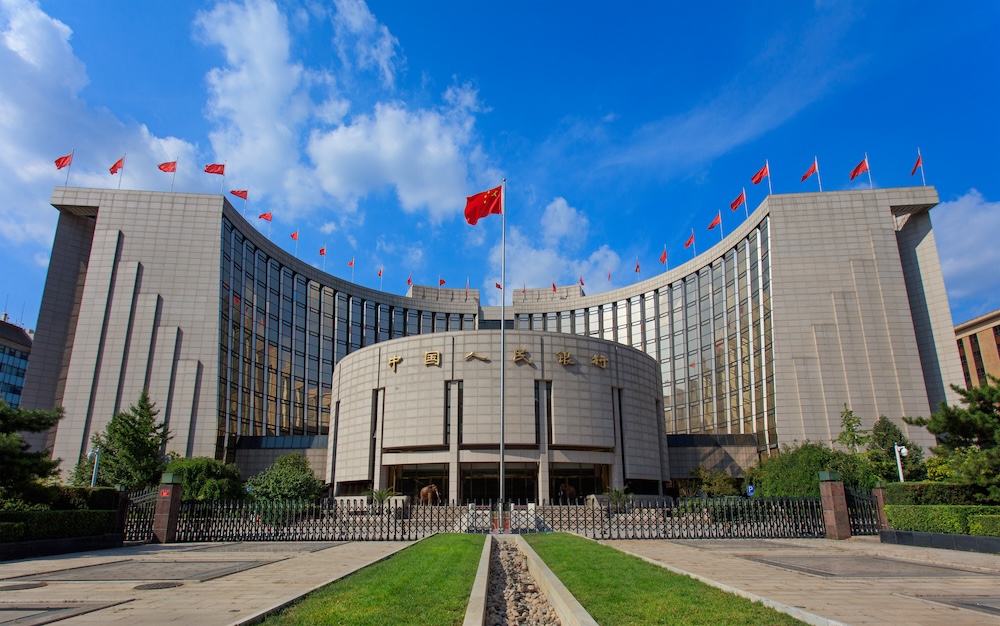
Former head office of the People’s Bank of China in Beijing. Photo by Eagle (stock.adobe.com).
China’s top legislature, the 14th NPC Standing Committee (NPCSC), will convene for its 23rd session from June 23 to 26, the Council of Chairpersons decided on Tuesday, June 16, 2026. According to the agenda proposed by the Council, the session will consider ten legislative bills and four oversight reports, among other business. As usual, we preview the session’s legislative agenda below.
The fourth session of China’s 14th National People’s Congress (NPC) concluded on Thursday, March 12. Below we have compiled a list of all official documents from this session (except for several legislative reports the NPC has so far neglected to release). We have also included the submitted (i.e., draft) versions of key documents for your reference. Documents are available in Chinese only unless otherwise noted. The vote results for each bill and resolution are listed below in brackets, in the order of for–against–abstention, followed by the number of delegates not voting (NV), if any.
China’s National People’s Congress (NPC) has released its 2026 session’s agenda and daily schedule of meetings, as well as a preliminary schedule of press events during the session. This year’s session will open on the morning of March 5 and close on the afternoon of March 12, lasting eight full days. As the NPC spokesperson announced in 2024, Premier Li Qiang will not hold a press conference after this session (or during the remainder of this NPC term “absent special circumstances”).
All times below are in China Standard Time (UTC +8:00). For a primer on the NPC and its annual sessions, check out this FAQ.
China’s national legislature, the Standing Committee of the National People’s Congress (NPCSC), is soliciting public comment on the following eight bills. The consultation period will end on February 9, 2026 for the draft revision to the Trademark Law and on January 25, 2026 for the other bills.
English translations will be provided if available. All explanatory documents are in Chinese and compiled in a single PDF; the links above will take you to the corresponding pages in the PDF.
China’s national legislature, the Standing Committee of the National People’s Congress (NPCSC), is soliciting public comment on the following ten bills through July 26, 2025.
English translations will be provided if available. All explanatory documents are in Chinese and compiled in a single PDF; the links above will take you to the corresponding pages in the PDF only if you use a desktop browser—this does not work on a phone or a tablet.
UPDATE (June 27, 2025): On June 27, the NPCSC approved revisions to the Public Security Administration Punishments Law (effective Jan. 1, 2026) and to the Anti–Unfair Competition Law (effective Oct. 15, 2025). It also removed Miao Hua as a member of the PRC Central Military Commission and ratified the Convention on the Establishment of the International Organization for Mediation, among the other actions taken.
China’s top legislature, the 14th NPC Standing Committee (NPCSC), will convene for its sixteenth session from June 24 to 27, the Council of Chairpersons decided on Monday, June 16. According to the Council’s proposed agenda, the session will consider twelve legislative bills, hear three oversight reports, and ratify the Convention on the Establishment of the International Organization for Mediation—which China signed on May 30 as a founding member. As usual, we preview the session’s legislative agenda in detail below.
On Wednesday, May 14, China’s national legislature, the Standing Committee of the National People’s Congress (NPCSC), released its legislative work plan for 2025 (Plan). The Plan was preliminarily approved by the Council of Chairpersons in December 2024 and finalized on April 18. It sets forth priorities for all aspects of the NPCSC’s legislative work in 2025, which include a list of legislative projects slated for review or research this year. Other aspects of the NPCSC’s legislative work include conducting constitutional review of draft laws, improving legislative procedure, raising public awareness of the NPC’s legislative activities, and offering guidance to local people’s congresses. As usual, we will focus on the list of legislative projects in this post.
UPDATE (Apr. 30, 2025): On April 30, the NPCSC approved the Private Economy Promotion Law (effective May 20, 2025); revised the Law on the Prevention and Control of Infectious Diseases (effective Sept. 1, 2025); and adopted a decision authorizing the State Council to temporarily modify a provision of the Seed Law in the Xinjiang Pilot Free Trade Zone (effective May 1, 2025).
Tourists riding bamboo rafts on the Li River in Yangshuo, Guangxi. Photo by Changhao Wei. All rights reserved.
China’s top legislature, the 14th NPC Standing Committee (NPCSC), will convene for its fifteenth session from April 27 to 30, the Council of Chairpersons decided on Friday, April 18. According to the Council’s proposed agenda, the session will consider eight legislative bills, which we preview below. The Council also approved the NPCSC’s 2025 work priorities as well as 2025 plans for legislative, oversight, delegates-related, and foreign-affairs work. We expect all but the foreign-affairs work plan to be released after the upcoming session, likely in early May.
China’s National People’s Congress (NPC) has released its 2025 session’s agenda and daily schedule of meetings, as well as a preliminary schedule of press events during the session. This year’s session will open on the morning of March 5 and close on the afternoon of March 11, lasting seven full days. As the NPC spokesperson announced last year, the Premier will not hold a press conference after this session (or during the remainder of this NPC’s term “absent special circumstances”).
All times below are in China Standard Time (UTC +8:00). For a primer on the NPC and its annual sessions, check out this FAQ.