Constitutional Social Rights vs. Collateral Consequences of Criminal Convictions

On Wednesday, December 25, China’s top legislature, the NPC Standing Committee (NPCSC), heard the annual report by its Legislative Affairs Commission (LAC) on “recording and review” [备案审查]: a process for resolving legislative conflicts that undermine China’s hierarchy of legal norms, including the supremacy of the Constitution. According to the report, private entities submitted a total of 5,682 requests for review in 2024, rebounding from what was hopefully an isolated dip in 2023 (when only 2,827 petitions were filed). This year’s report disclosed ten instances of legislation failing review, several of which merit in-depth coverage. (The rest we will discuss in a future issue of our newsletter.) Here, we will introduce two cases where the LAC—relying in part on constitutional protections for certain social rights—repudiated two types of collateral consequences imposed on individuals with criminal records: ineligibility for public-welfare benefits and employment restrictions.

Continue reading “Constitutional Social Rights vs. Collateral Consequences of Criminal Convictions”

Chinese Legislature Seeks Public Comment on 7 Bills: Private Sector Promotion, Unfair Competition, Fishery Regulation, Law Propaganda & More

China’s national legislature, the Standing Committee of the National People’s Congress (NPCSC), is soliciting public comment on the following seven bills through January 23, 2025:

Draft NameChinese TextExplanatory Document
Law on the Delegates to the National People’s Congress and Local People’s Congresses (2nd Draft Amendment)
全国人民代表大会和地方各级人民代表大会代表法修正草案二次审议稿
PDF ΔN/A
National Parks Law (2nd Draft)
国家公园法草案二次审议稿
PDFN/A
Law on Publicity and Education on the Rule of Law (Draft)
法治宣传教育法草案
PDFPDF
Private Economy Promotion Law (Draft)
民营经济促进法草案
PDFPDF
Anti–Unfair Competition Law (Draft Revision)
反不正当竞争法修订草案
PDF ΔPDF
Fisheries Law (Draft Revision)
渔业法修订草案
PDF ΔPDF
Hazardous Chemicals Safety Law (Draft)
危险化学品安全法草案
PDFPDF

English translations will be provided if available. All available explanatory documents are in Chinese and compiled in a single PDF; the links above will take you to the corresponding pages in the PDF only if you use a desktop browser—this does not work on a phone or a tablet. We will update the file if additional explanatory documents are released.

Continue reading “Chinese Legislature Seeks Public Comment on 7 Bills: Private Sector Promotion, Unfair Competition, Fishery Regulation, Law Propaganda & More”

NPCSC Session Watch: VAT, Anti-Corruption, Private Sector Promotion, Law Propaganda & Unfair Competition

UPDATE (Dec. 26, 2024): On December 25, the NPCSC approved the Value-Added Tax Law (effective Jan. 1, 2026); amended the Supervision Law (effective June 1, 2025); and revised the Science and Technology Popularization Law (effective immediately).

Poster has the text "abiding by laws and popularizing laws is everyone's responsibility."
“Law popularization” propaganda poster released by the justice bureau of Qingyuan, Guangdong in 2021.

China’s top legislature, the 14th NPC Standing Committee (NPCSC), will convene for its thirteenth session from December 21 to 25, the Council of Chairpersons decided on Friday, December 13. The Council proposed an agenda with ten legislative bills and several reports that might be of interest, which we preview below. It also approved the NPCSC’s 2025 work priorities as well as 2025 plans for legislative, oversight, delegates-related, and foreign affairs work; these documents will be finalized next April, and at least the first four will be publicly released thereafter.

Continue reading “NPCSC Session Watch: VAT, Anti-Corruption, Private Sector Promotion, Law Propaganda & Unfair Competition”

Chinese Legislature Seeks Public Comment on 4 Bills: People’s Congress Delegates, Arbitration, Maritime Affairs & Sci-Tech Popularization

China’s national legislature, the Standing Committee of the National People’s Congress (NPCSC), is soliciting public comment on the following four bills through December 7, 2024:

Draft NameChinese TextExplanatory Document
Law on the Delegates to the National People’s Congress and Local People’s Congresses (Draft Amendment)
全国人民代表大会和地方各级人民代表大会代表法修正草案
PDF ΔPDF
Arbitration Law (Draft Revision)
仲裁法修订草案
PDF ΔPDF
Maritime Law (Draft Revision)
海商法修订草案
PDF ΔPDF
Science and Technology Popularization Law (Draft Revision)
科学技术普及法修订草案
PDF ΔPDF

English translations will be provided if available. All explanatory documents are in Chinese and compiled in a single PDF; the links above will take you to the corresponding pages in the PDF only if you use a desktop browser—this does not work on a phone or a tablet.

Continue reading “Chinese Legislature Seeks Public Comment on 4 Bills: People’s Congress Delegates, Arbitration, Maritime Affairs & Sci-Tech Popularization”

NPCSC Session Watch: Fiscal Stimulus(?), People’s Congress Reforms, Energy, Arbitration, Maritime Law & Sci-Tech Popularization

UPDATE (Nov. 11, 2024): On November 8, the NPCSC adopted the Preschool Education Law (effective June 1, 2025) and the Energy Law (effective Jan. 1, 2025); revised the Cultural Relics Protection Law (effective Mar. 1, 2025), Mineral Resources Law (effective July 1, 2025), and Anti–Money Laundering Law (effective Jan. 1, 2025); and amended the Oversight Law (effective immediately). It also extended the pilot program to suspend two provisions of the Metrology Law in six cities for three years, and approved an increase in local government debt limits to repay hidden debt.

UPDATE (Nov. 4, 2024): According to the readout of the session’s opening meeting, the NPCSC is also reviewing a bill submitted by the State Council to “increase the local government debt limit to swap existing hidden debt,” which it is expected to approve on November 8. The NPCSC may be reviewing additional, as-yet undisclosed fiscal measures. In addition, the readout shows that the NPCSC is expected to approve the draft Oversight Law amendment at this session.

Photo by David Grant/Flickr. CC BY-NC 2.0.

China’s top legislature, the 14th NPC Standing Committee (NPCSC), will convene for its twelfth session from November 4 to 8, the Council of Chairpersons decided on Friday, October 25. This session should have been held in late October, but has been postponed for reasons unknown. Two bills that the NPCSC recently discussed at its previous session—which was itself postponed—will return for further review, so the legislature might have needed additional time to prepare new drafts. Or the delay might have been necessary to place a highly anticipated stimulus package on the agenda, though the readout of the Council’s meeting disclosed no such bill. But that is not the end of the story, as we will explain shortly. According to the Council’s proposed agenda, the session will consider 11 legislative bills, which we also preview below.

Continue reading “NPCSC Session Watch: Fiscal Stimulus(?), People’s Congress Reforms, Energy, Arbitration, Maritime Law & Sci-Tech Popularization”

Commentary & Translation: China’s Plan to Raise Statutory Retirement Ages

Editor’s Note: In April 2025, we published in the Made in China Journal a longer commentary on the Decision that digs deeper into the history of retirement-age legislation and demographic changes in China, the national legislature’s post–Cultural Revolution lawmaking reforms, as well as its procedural failings in adopting the Decision.

On Friday, September 13, China’s national legislature, the Standing Committee of the National People’s Congress (NPCSC) approved the Decision on Gradually Raising the Statutory Retirement Ages (Decision) [关于实施渐进式延迟法定退休年龄的决定]. Upon taking effect next year, the Decision will finally implement a reform that has been on the Chinese government’s agenda since at least 2013.

The Decision has three visually distinct components. It begins with a short main text with five articles covering only the essentials of the reform. What follows is a set of measures, attributed to the State Council, that describe the specific steps to implement the reform. The Decision ends with four charts (technically, annexes to the State Council’s measures) that allow citizens to easily look up their new retirement ages and see how much longer they may need to contribute to the pension fund to qualify for pension payments. As a legislative official made clear, all three are integral parts of the Decision and thus have statutory force.

News outlets worldwide have extensively covered the demographic challenges driving the reform, the initial public reaction to the plan, and its details. We won’t belabor the same points here. Nor will we delve into the Decision’s substance, a task we leave to subject matter experts.

Instead, we will provide a translation of the Decision (sans the charts) and discuss three issues related to the Decision: the NPCSC’s involvement in this major policy decision; the swift and secretive way in which the Decision was adopted; and the Decision’s unusual makeup—i.e., its inclusion of the State Council’s measures.

Continue reading “Commentary & Translation: China’s Plan to Raise Statutory Retirement Ages”

NPCSC Seeks Public Comment on 6 Bills: Anti-Corruption, Public Health Response, Energy, Anti–Money Laundering & National Parks

China’s national legislature, the Standing Committee of the National People’s Congress (NPCSC), is soliciting public comment on the following six bills through October 12, 2024:

Draft NameChinese TextExplanatory Document
Law on Preventing and Controlling Infectious Diseases (2nd Draft Revision)
传染病防治法修订草案二次审议稿
PDFPDF
Energy Law (2nd Draft)
能源法草案二次审议稿
PDFPDF
Anti–Money Laundering Law (2nd Draft Revision)
反洗钱法修订草案二次审议稿
PDF
(English · Δ)
PDF
Public Health Emergency Response Law (Draft)
突发公共卫生事件应对法草案
PDFPDF
National Parks Law (Draft)
国家公园法草案
PDFPDF
Supervision Law (Draft Amendment)
监察法修正草案
PDF Δ
(English Δ)
PDF

English translations will be provided if available. All explanatory documents are in Chinese and compiled in a single PDF; the links above will take you to the corresponding pages in the PDF only if you use a desktop browser—this does not work on a phone or a tablet.

To submit comment online, please refer to this guide. Comments can also be mailed to the NPCSC Legislative Affairs Commission [全国人大常委会法制工作委员会] at the following address:

北京市西城区前门西大街1号 邮编: 100805
1 West Qianmen Avenue, Xicheng District, Beijing 100805

Please clearly write “<Draft Name in Chinese>征求意见” on the envelope.

NPCSC Session Watch: Anti-Corruption, Defense Education, Public Health Emergency, Government Debt, National Parks & State Honors

UPDATE (Sept. 13, 2024): On Friday, September 13, the NPCSC revised the National Defense Education Law (effective Sept. 21, 2024) and amended the Statistics Law (effective immediately), while releasing six other bills for public comment through October 12. The NPCSC also adopted a decision conferring state honors on various individuals to mark the PRC’s 70th anniversary and a decision on gradually raising the statutory retirement ages (effective Jan. 1, 2025).

UPDATE (Sept. 10, 2024): According to the official readout of the NPCSC’s meeting on September 10, it is also considering a draft decision, submitted by the State Council, to “gradually raise the statutory retirement ages.” The readout has not offered any other information about the bill, which we expect to pass on Friday.

Aerial view of the former Hoh Xil Nature Reserve, now part of the Three-River-Source National Park in Qinghai. Photo by Michael Wong/Flickr, CC BY-NC 2.0.

China’s top legislature, the 14th NPC Standing Committee (NPCSC), will convene for its eleventh session from September 10 to 13, the Council of Chairpersons decided on Tuesday, August 27. The session will consider eight legislative bills, according to the Council’s proposed agenda. The session will also adopt a decision to confer state honors on a slate of individuals nominated by the Communist Party to mark the 75th anniversary of the People’s Republic on October 1. The legislature likely has delayed its typical August session to mid-September to announce the conferral decision closer to the National Day holiday. (Five years ago, it held a special session on September 17 for that very purpose.) Lastly, the session will hear a few reports that might be of interest. We preview these agenda items below.

Continue reading “NPCSC Session Watch: Anti-Corruption, Defense Education, Public Health Emergency, Government Debt, National Parks & State Honors”

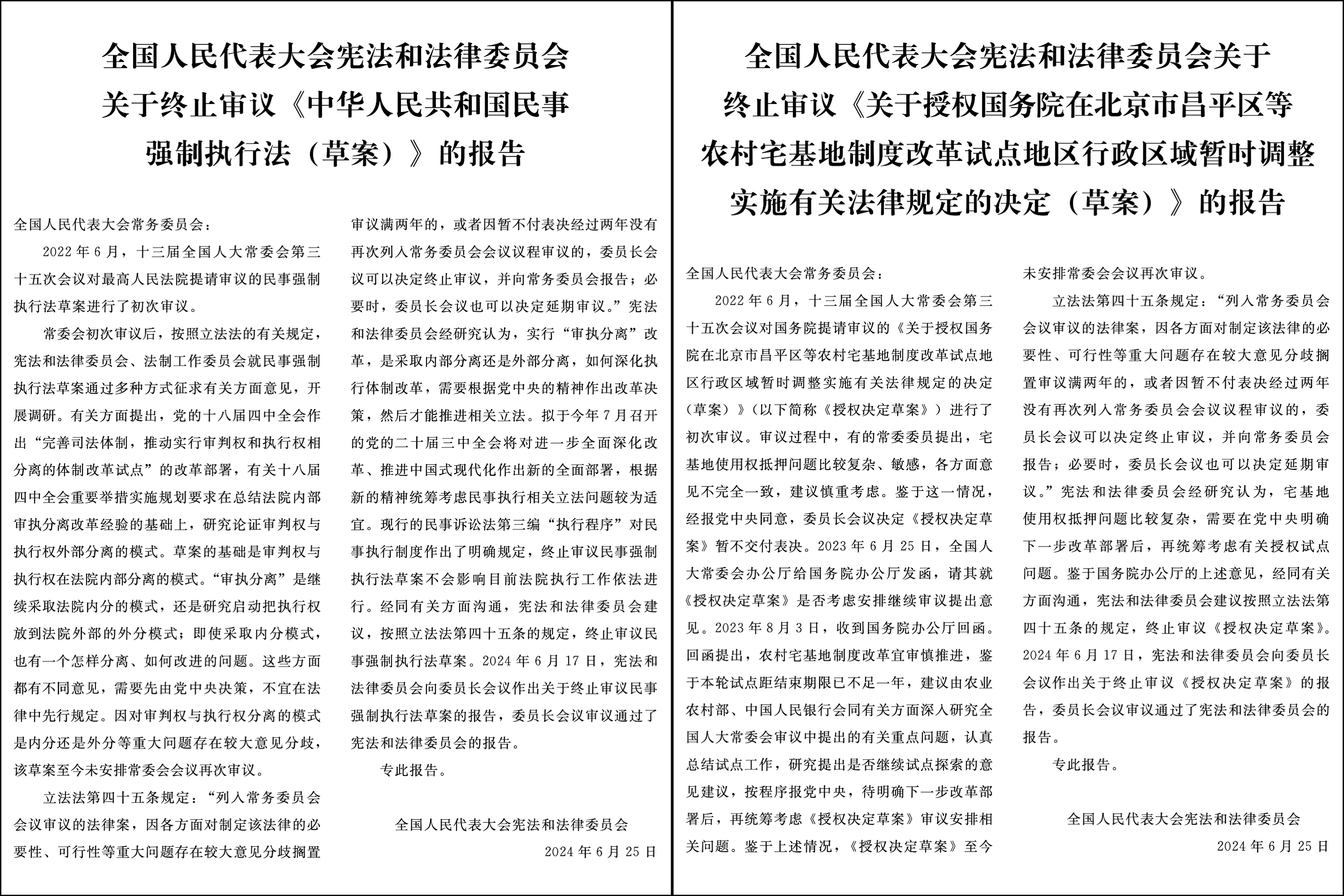
In Rare Move, Chinese Legislature Shelves Two Bills

The two reports of the NPC Constitution and Law Committee recommending shelving the two bills discussed in this post, as published in the NPCSC Gazette.

It is rare for a bill to “die” in the Chinese legislature. It is rarer for two bills introduced at the same time to later meet that fate together. Recently, the NPC Standing Committee (NPCSC) disclosed in its official publication, the NPCSC Gazette, that it decided to “terminate deliberations” [终止审议] on two bills that it reviewed in June 2022: a draft Compulsory Civil Enforcement Law [民事强制执行法] and a draft decision authorizing to the State Council to pilot certain reforms of rural residential land. In other words, the two bills in their current form have been shelved indefinitely. This post recounts the history of the deliberation-termination procedure and discusses the two bills at issue.

Continue reading “In Rare Move, Chinese Legislature Shelves Two Bills”

The NPC and the 2024 Third Plenum Decision

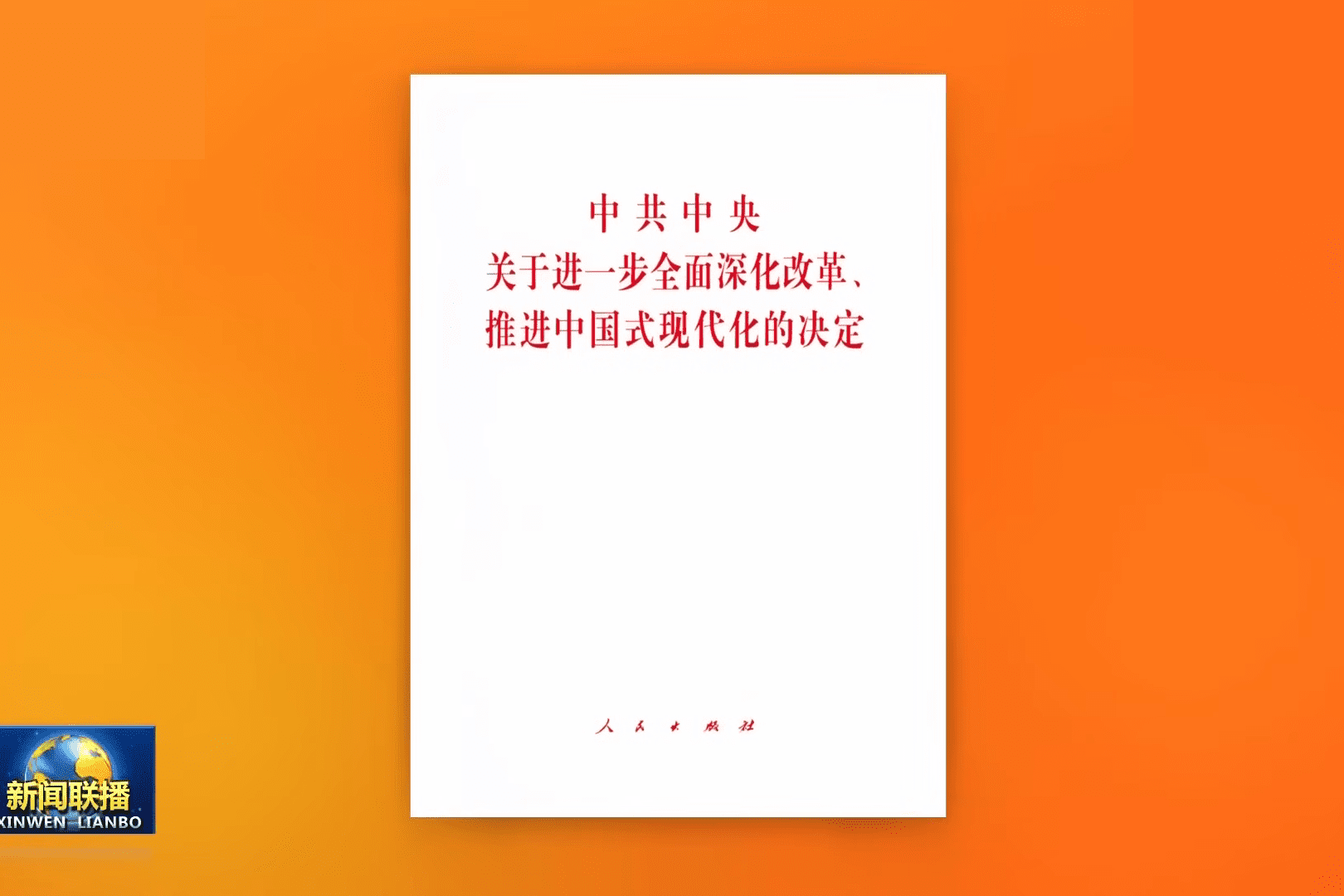
Screenshot of the July 21, 2024 edition of Xinwen Lianbo program, showing the cover of a booklet of the Decision.

On July 18, the Communist Party’s 20th Central Committee at its Third Plenum adopted the Decision on Further Deepening Reform Comprehensively to Advance Chinese-Style Modernization (Decision)1 [关于进一步全面深化改革 推进中国式现代化的决定], which was made public on Sunday, July 21. (Here is a bilingual version of the Decision in PDF and HTML.) The day after the Plenum, the Party Group of the NPC Standing Committee (NPCSC) met to study the Decision and other documents from the Plenum. The meeting hailed the Decision as a “programmatic document” [纲领性文件] for further reforms and called on the NPC apparatus to, consistent with the NPC’s functions and responsibilities, “take solid steps to advance the legislative, oversight, and other tasks and initiatives ordered by the Plenum.” Such tasks and initiatives fall into three slightly overlapping categories: (1) reforms of the NPC itself and local people’s congresses; (2) explicit legislative tasks for the NPC; and (3) other reforms that would require NPC action to implement. Although Xi Jinping has reportedly instructed that the Decision not include any “general reform measures, developmental measures, or reform measures that central authorities had already deployed and were being implemented,” that has not always been the case—at least for those NPC-related reforms. And finally, the Decision notably sets 2029, when the PRC celebrates its 80th anniversary, as the deadline for completing its myriad reform tasks. Below we take a brief look at each of the three categories of NPC-related reforms by excerpting from the Decision and supplementing with our commentaries.

Continue reading “The NPC and the 2024 Third Plenum Decision”