NPC 2025: Documents and Votes

The third session of China’s 14th National People’s Congress (NPC) concluded on Tuesday, March 11. Below we have compiled a list of all official documents from this session (except for two legislative reports the NPC has so far neglected to release). We have also linked to the submitted (i.e., draft) version of the six main reports for your reference. Unless otherwise noted, the documents are available in Chinese only. The vote results for each bill and resolution are listed below in brackets, in the order of yea–nay–abstention.

Continue reading “NPC 2025: Documents and Votes”

NPC 2025: Agenda and Daily Schedule

China’s National People’s Congress (NPC) has released its 2025 session’s agenda and daily schedule of meetings, as well as a preliminary schedule of press events during the session. This year’s session will open on the morning of March 5 and close on the afternoon of March 11, lasting seven full days. As the NPC spokesperson announced last year, the Premier will not hold a press conference after this session (or during the remainder of this NPC’s term “absent special circumstances”).

All times below are in China Standard Time (UTC +8:00). For a primer on the NPC and its annual sessions, check out this FAQ.

Continue reading “NPC 2025: Agenda and Daily Schedule”

NPCSC Session Watch: Private Sector Promotion, Civil Aviation & NPC Preparations

UPDATE (Feb. 21, 2025): According to the spokesperson’s office of the NPCSC Legislative Affairs Commission, the draft Private Economy Promotion Law will not pass at the upcoming session as we expected, but will instead undergo a third and final review “as soon as possible.”

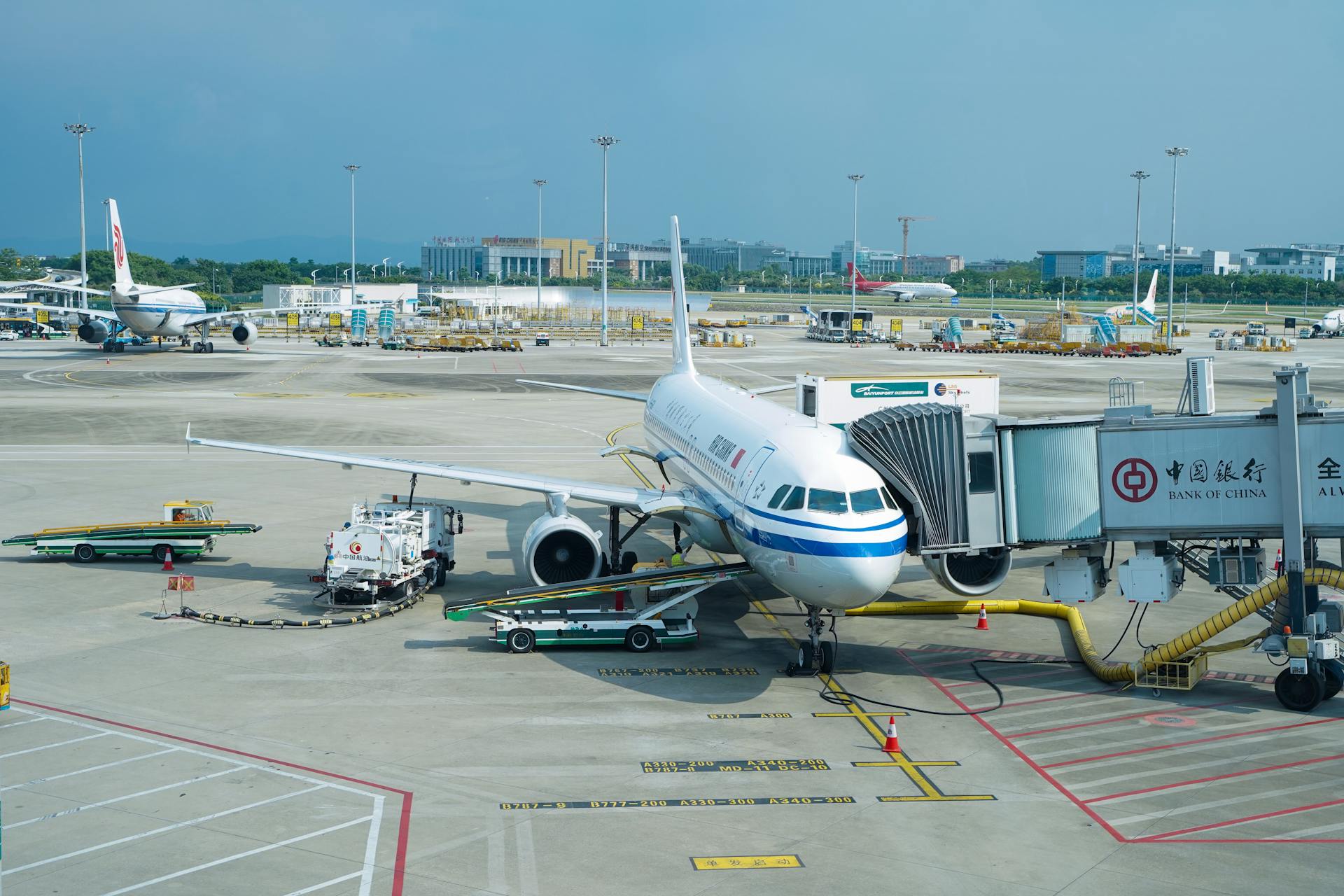
An Air China plane parked in a Chinese airport
Photo by Nicholas Fu from Pexels

China’s top legislature, the 14th NPC Standing Committee (NPCSC), will convene for its fourteenth session from February 24 to 25, the Council of Chairpersons decided on Monday, February 17.

As expected, this two-day meeting will primarily make preparations for the NPC’s 2025 session, scheduled to open on March 5. Besides discussing its annual work report to the NPC, the NPCSC will review a proposed itemized agenda for the 2025 NPC session, among other preparatory matters. While the agenda will not be finalized until March 4, the NPCSC already previewed all the agenda items last December: routine work reports, government budgets, China’s annual socioeconomic development plan, and a legislative bill.

The NPCSC will also review two pieces of legislation at its upcoming session.

Continue reading “NPCSC Session Watch: Private Sector Promotion, Civil Aviation & NPC Preparations”

NPCSC Session Watch: VAT, Anti-Corruption, Private Sector Promotion, Law Propaganda & Unfair Competition

UPDATE (Dec. 26, 2024): On December 25, the NPCSC approved the Value-Added Tax Law (effective Jan. 1, 2026); amended the Supervision Law (effective June 1, 2025); and revised the Science and Technology Popularization Law (effective immediately).

Poster has the text "abiding by laws and popularizing laws is everyone's responsibility."
“Law popularization” propaganda poster released by the justice bureau of Qingyuan, Guangdong in 2021.

China’s top legislature, the 14th NPC Standing Committee (NPCSC), will convene for its thirteenth session from December 21 to 25, the Council of Chairpersons decided on Friday, December 13. The Council proposed an agenda with ten legislative bills and several reports that might be of interest, which we preview below. It also approved the NPCSC’s 2025 work priorities as well as 2025 plans for legislative, oversight, delegates-related, and foreign affairs work; these documents will be finalized next April, and at least the first four will be publicly released thereafter.

Continue reading “NPCSC Session Watch: VAT, Anti-Corruption, Private Sector Promotion, Law Propaganda & Unfair Competition”

NPCSC Session Watch: Fiscal Stimulus(?), People’s Congress Reforms, Energy, Arbitration, Maritime Law & Sci-Tech Popularization

UPDATE (Nov. 11, 2024): On November 8, the NPCSC adopted the Preschool Education Law (effective June 1, 2025) and the Energy Law (effective Jan. 1, 2025); revised the Cultural Relics Protection Law (effective Mar. 1, 2025), Mineral Resources Law (effective July 1, 2025), and Anti–Money Laundering Law (effective Jan. 1, 2025); and amended the Oversight Law (effective immediately). It also extended the pilot program to suspend two provisions of the Metrology Law in six cities for three years, and approved an increase in local government debt limits to repay hidden debt.

UPDATE (Nov. 4, 2024): According to the readout of the session’s opening meeting, the NPCSC is also reviewing a bill submitted by the State Council to “increase the local government debt limit to swap existing hidden debt,” which it is expected to approve on November 8. The NPCSC may be reviewing additional, as-yet undisclosed fiscal measures. In addition, the readout shows that the NPCSC is expected to approve the draft Oversight Law amendment at this session.

Photo by David Grant/Flickr. CC BY-NC 2.0.

China’s top legislature, the 14th NPC Standing Committee (NPCSC), will convene for its twelfth session from November 4 to 8, the Council of Chairpersons decided on Friday, October 25. This session should have been held in late October, but has been postponed for reasons unknown. Two bills that the NPCSC recently discussed at its previous session—which was itself postponed—will return for further review, so the legislature might have needed additional time to prepare new drafts. Or the delay might have been necessary to place a highly anticipated stimulus package on the agenda, though the readout of the Council’s meeting disclosed no such bill. But that is not the end of the story, as we will explain shortly. According to the Council’s proposed agenda, the session will consider 11 legislative bills, which we also preview below.

Continue reading “NPCSC Session Watch: Fiscal Stimulus(?), People’s Congress Reforms, Energy, Arbitration, Maritime Law & Sci-Tech Popularization”

Commentary & Translation: China’s Plan to Raise Statutory Retirement Ages

Editor’s Note: In April 2025, we published in the Made in China Journal a longer commentary on the Decision that digs deeper into the history of retirement-age legislation and demographic changes in China, the national legislature’s post–Cultural Revolution lawmaking reforms, as well as its procedural failings in adopting the Decision.

On Friday, September 13, China’s national legislature, the Standing Committee of the National People’s Congress (NPCSC) approved the Decision on Gradually Raising the Statutory Retirement Ages (Decision) [关于实施渐进式延迟法定退休年龄的决定]. Upon taking effect next year, the Decision will finally implement a reform that has been on the Chinese government’s agenda since at least 2013.

The Decision has three visually distinct components. It begins with a short main text with five articles covering only the essentials of the reform. What follows is a set of measures, attributed to the State Council, that describe the specific steps to implement the reform. The Decision ends with four charts (technically, annexes to the State Council’s measures) that allow citizens to easily look up their new retirement ages and see how much longer they may need to contribute to the pension fund to qualify for pension payments. As a legislative official made clear, all three are integral parts of the Decision and thus have statutory force.

News outlets worldwide have extensively covered the demographic challenges driving the reform, the initial public reaction to the plan, and its details. We won’t belabor the same points here. Nor will we delve into the Decision’s substance, a task we leave to subject matter experts.

Instead, we will provide a translation of the Decision (sans the charts) and discuss three issues related to the Decision: the NPCSC’s involvement in this major policy decision; the swift and secretive way in which the Decision was adopted; and the Decision’s unusual makeup—i.e., its inclusion of the State Council’s measures.

Continue reading “Commentary & Translation: China’s Plan to Raise Statutory Retirement Ages”

NPCSC Session Watch: Anti-Corruption, Defense Education, Public Health Emergency, Government Debt, National Parks & State Honors

UPDATE (Sept. 13, 2024): On Friday, September 13, the NPCSC revised the National Defense Education Law (effective Sept. 21, 2024) and amended the Statistics Law (effective immediately), while releasing six other bills for public comment through October 12. The NPCSC also adopted a decision conferring state honors on various individuals to mark the PRC’s 70th anniversary and a decision on gradually raising the statutory retirement ages (effective Jan. 1, 2025).

UPDATE (Sept. 10, 2024): According to the official readout of the NPCSC’s meeting on September 10, it is also considering a draft decision, submitted by the State Council, to “gradually raise the statutory retirement ages.” The readout has not offered any other information about the bill, which we expect to pass on Friday.

Aerial view of the former Hoh Xil Nature Reserve, now part of the Three-River-Source National Park in Qinghai. Photo by Michael Wong/Flickr, CC BY-NC 2.0.

China’s top legislature, the 14th NPC Standing Committee (NPCSC), will convene for its eleventh session from September 10 to 13, the Council of Chairpersons decided on Tuesday, August 27. The session will consider eight legislative bills, according to the Council’s proposed agenda. The session will also adopt a decision to confer state honors on a slate of individuals nominated by the Communist Party to mark the 75th anniversary of the People’s Republic on October 1. The legislature likely has delayed its typical August session to mid-September to announce the conferral decision closer to the National Day holiday. (Five years ago, it held a special session on September 17 for that very purpose.) Lastly, the session will hear a few reports that might be of interest. We preview these agenda items below.

Continue reading “NPCSC Session Watch: Anti-Corruption, Defense Education, Public Health Emergency, Government Debt, National Parks & State Honors”

NPCSC Session Watch: Public Security Offenses, Border Health, Financial Stability, Mineral Resources & Report on Promoting Development of Private Economy

UPDATE (June 29, 2024): On June 28, the NPC Standing Committee (NPCSC) revised the Emergency Response Law (effective Nov. 1, 2024) and the Border Health and Quarantine Law (effective Jan. 1, 2025); passed the Rural Collective Economic Organizations Law (effective May 1, 2025) and an amendment to the Accounting Law (effective July 1, 2024); and approved a decision authorizing the State Council to suspend certain provisions of the Food Safety Law in the Hainan Free Trade Port (effective Oct. 1, 2024).

Close-up on the belt of a Chinese police officer in Beijing displaying the coat of arms of China.
Photo by Gwengoat. iStock.com standard license.

China’s top legislature, the 14th NPC Standing Committee (NPCSC), will convene for its tenth session from June 25 to 28, the Council of Chairpersons decided on Monday, June 17. The Council proposed an agenda with ten legislative bills, all of which are pending bills that return for further review. The agenda also includes a report by the State Council that might be of wider interest. We briefly discuss these items below.

Continue reading “NPCSC Session Watch: Public Security Offenses, Border Health, Financial Stability, Mineral Resources & Report on Promoting Development of Private Economy”

NPCSC Session Watch: National Defense Education, (Atomic) Energy, Anti–Money Laundering & Official Statistics

UPDATE (Apr. 26, 2024): On April 26, 2024, the NPCSC approved the Academic Degrees Law (effective Jan. 1, 2025) and the Tariff Law (effective Dec. 1, 2024). It also adopted the amendments to the Agricultural Technology Popularization Law, Minors Protection Law, and Biosecurity Law. For reasons unknown, the State Council’s request for an authorization to pilot reforms of the Food Safety Law in the Hainan Free Trade Port was not put to a vote.

Wind farm in Shanxi. Photo by Hahaheditor12667 (cropped). CC BY-SA 4.0.

China’s top legislature, the 14th NPC Standing Committee (NPCSC), will convene for its ninth session from April 23 to 26, the Council of Chairpersons decided on Tuesday, April 16. The Council proposed an agenda with ten legislative bills, which we preview below. It also approved the NPCSC’s 2024 work priorities as well as 2024 plans for legislative, oversight, and delegates-related work, which we expect will be released after the upcoming session.

Continue reading “NPCSC Session Watch: National Defense Education, (Atomic) Energy, Anti–Money Laundering & Official Statistics”

NPC 2024: Documents and Votes

The second session of China’s 14th National People’s Congress (NPC) concluded on Monday, March 11. Below we have compiled a list of all official documents from this session (except for two legislative documents the NPC has so far neglected to release). We have also linked to the submitted (i.e., draft) version of six main reports for your reference. Unless otherwise noted, the documents are available in Chinese only. The vote results for each bill and resolution are listed below in brackets, in the order of yea–nay–abstention.

Continue reading “NPC 2024: Documents and Votes”