NPC Calendar: May 2023

Here is our recap of NPC-related events in May 2023 at our monthly newsletter.

The revised Wild Animals Protection Law [野生动物保护法] (adopted on Dec. 30, 2022) takes effect on May 1.

The NPC Standing Committee (NPCSC) is soliciting public comment on a draft Barrier-Free Environments Development Law [无障碍环境建设法] through May 25.

The NPCSC is expected to release its annual plans on legislative, oversight, and delegates work for 2023 soon after the Labor Day holiday (ending on May 3).

It will convene for its next regularly scheduled session in late June.

NPCSC Seeks Public Comment on Draft Barrier-Free Environments Law

The NPC Standing Committee (NPCSC) is seeking public comments on the second deliberation draft of the Barrier-Free Environments Development Law [无障碍环境建设法] through May 25, 2023. The draft is available in PDF here and an explanatory document (in Chinese) here. An English translation will be provided if and when available.

To submit comments online, please refer to this guide. Comments can also be mailed to the NPCSC Legislative Affairs Commission [全国人大常委会法制工作委员会] at the following address:

北京市西城区前门西大街1号 邮编: 100805
No. 1 West Qianmen Avenue, Xicheng District, Beijing 100805

Please clearly write “无障碍环境建设法草案二次审议稿征求意见” on the envelope.

NPCSC Session Watch: Counterespionage, Accessible Environments & Tibetan Plateau Conservation

A man in suit holding a yellow folder marked with "top secret" in red.

The 14th NPC Standing Committee (NPCSC) will convene for its second session from April 24 to 26, the Council of Chairpersons decided on Friday. Before providing our customary rundown of the session’s legislative agenda, we’d like to first discuss our approach to covering the NPCSC’s sessions during its new five-year term—what will change and what won’t.

Continue reading “NPCSC Session Watch: Counterespionage, Accessible Environments & Tibetan Plateau Conservation”

NPC Calendar: April 2023

This post was updated on May 2, 2023. The original version is archived here.

The Yellow River Protection Law [黄河保护法] (adopted on Oct. 30, 2022) took effect on April 1.

On April 14, the Council of Chairpersons held a meeting where it—

  • decided to convene the second session of the 14th NPC Standing Committee (NPCSC);
  • approved the NPCSC’s 2023 plans on legislative, oversight, and delegates work, which so far have not been released; and
  • revised the Council’s rules of procedure, rules of procedure for the NPCSC Secretary-General’s meetings, measures for personnel appointments and removals by the NPCSC, working procedures for NPCSC sessions, and measures for Council members’ implementation of the Communist Party’s austerity rules—which are unlikely to be made public.

The 14th NPCSC held its second session from April 24 to April 26. On April 26, it adopted—

The session also reviewed a draft Barrier-Free Environments Development Law [无障碍环境建设法], on which the NPCSC began seeking public comment on April 26.

Finally, the session reviewed the State Council’s reports on the environmental conditions and fulfillment of environmental protection targets in 2022 and on work relating to overseas Chinese in the New Era; and appointed the constituent members of the 14th NPCSC Delegate Credentials Committee.

On April 26, the 14th NPCSC held four educational lectures for its constituent members on the following topics:

NPC to Establish New Agency to Support Delegates

UPDATE (June 28, 2023): The NPCSC established the NPCSC Deputies Affairs Commission on June 28, 2023. It also appointed the Commission’s director and two deputy directors.

Former NPCSC Chairman Li Zhanshu participating in a discussion session with delegates invited to attend the NPCSC’s August 2022 session in a nonvoting capacity. Photo by Xinhua.

The number of agencies under the National People’s Congress (NPC) is about to grow by one. In the Party-state restructuring plan released on March 16, the Communist Party has decided to set up a new Delegates Affairs Commission1 [代表工作委员会] under the NPC Standing Committee (NPCSC) to take charge of “delegates work” [代表工作],2 an often overlooked part of the NPCSC’s duties. “Delegates work,” in sum, refers to a range of activities carried out by the NPCSC, NPC special committees, as well as their members and staff to facilitate (and, to a lesser extent, supervise) ordinary NPC delegates’ discharge of their duties. The last NPCSC (2018–23), led by Chairman Li Zhanshu, markedly elevated the importance of delegates work to the same level as lawmaking and oversight. The new Commission could thus be seen as an epilogue to the previous NPCSC’s reforms and an embodiment of its legacy.

Continue reading “NPC to Establish New Agency to Support Delegates”

NPC 2023: Documents and Votes

The first session of China’s 14th National People’s Congress (NPC) concluded on Monday, March 13. Below we have compiled a list of all official documents from this session. Unless otherwise noted, all documents are available in Chinese only.

Where available, the vote results for each bill, resolution, and personnel matter are also listed below in brackets, in the order of yea – nay – abstention, followed by the number of delegates not voting (NV), if any. Some results are presented in a spreadsheet embedded at the bottom of this page. Thank you to Twitter user @MelanievonBraun for recording the votes received by each candidate for NPC Standing Committee member based on a livestream of the proceedings and for sharing the dataset with us.

Continue reading “NPC 2023: Documents and Votes”

A Guide to China’s 2023 State Council Restructuring

UPDATE #2 (Mar. 23, 2023): Chinese authorities released the full Party and State Institutional Reform Plan on March 16, and the new State Council announced its organizational structure on March 20. We have accordingly updated our bilingual State Council organizational chart and this guide. Click here to jump to the update.

UPDATE #1 (Mar. 10, 2023): The NPC approved the State Council Institutional Reform Plan on March 10 and has released its full text, which is identical to the version discussed in this post.

On Tuesday, March 7, China unveiled details of its 2023 State Council Institutional Reform Plan (Plan) [国务院机构改革方案]. The National People’s Congress (NPC) is set to approve the Plan on March 9, ahead of its votes to appoint a new slate of State Council officials on March 10–11. This would be the ninth round of State Council reorganization since the Reform Era began. Previous rounds took place in 1982, 1988, and every five years thereafter.

Continue reading “A Guide to China’s 2023 State Council Restructuring”

NPC 2023: Agenda and Daily Schedule

China’s National People’s Congress (NPC) has released its 2023 session’s agenda and daily schedule of meetings. This year’s session will open on the morning of March 5 and close on the morning of March 13. Lasting only eight and a half days, it is the shortest inaugural session of an NPC in at least forty years. NPC sessions in the last three years were each shortened to seven days (from typically ten) due to Covid-control measures. This year’s session is the first one held since the zero-Covid policy ended last December, but it appears the compressed meeting schedule is here to stay. All times below are in China Standard Time (UTC +8:00). For a primer on the NPC and its annual sessions, check out this FAQ.

Continue reading “NPC 2023: Agenda and Daily Schedule”

NPC 2023: How China Selects Its State Leaders for the Next Five Years

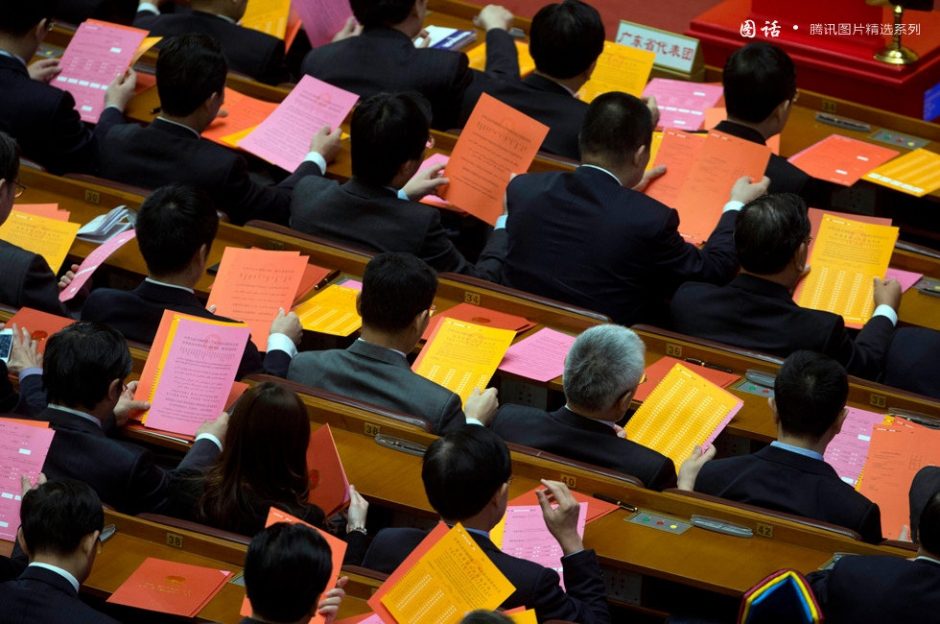
NPC delegates reading election ballots during the 2013 NPC session. Photo by Tencent.

The 14th National People’s Congress (NPC) will convene for its inaugural session on Sunday. One closely watched task for the session this year is to fill an array of positions in core state institutions whose five-year terms are about to expire, from the nation’s head of state to hundreds of new members on various legislative committees. In this post, we will explain what those positions are, introduce the two methods of selection (election and appointment), discuss the Communist Party-controlled nomination process, and lastly take a look at how the NPC will deliberate and vote on the nominations in the next several days.

There are few standing legal rules on China’s quinquennial state leadership changes. Instead, they follow the ad hoc procedural rules adopted by the NPC every five years, as well as the Party’s internal practices on the selection of candidates. This post is based on those past rules and practices. While the details have changed from cycle to cycle, the fundamentals have remained the same. We will update this post once the NPC approves the ad hoc rules that will govern this year’s elections and appointments.

Continue reading “NPC 2023: How China Selects Its State Leaders for the Next Five Years”

NPC 2023: Amendments to China’s “Statutory Constitution” of Lawmaking

Editor’s Note (Mar. 16, 2023): We have updated this post in accordance with the final text of the amendments adopted on March 13. The original version of this post is archived here.

For the ninth year in a row, China’s National People’s Congress (NPC) considered and adopted legislation at its annual session earlier this month. This year’s bill was amendments to the Legislation Law [立法法] (Bill), previously reviewed in October and December 2022. The Legislation Law is an important statute with semi-constitutional status. It serves three principal purposes: it demarcates the legislative authority of various state institutions; regulates (to varying extents) their legislative procedures; and prescribes a hierarchy of legal norms, along with the attendant mechanism to enforce that hierarchy, called “recording and review” [备案审查].

The Bill has made an array of amendments to provisions in all three areas. In this post, we will offer a relatively thorough discussion of the Bill, proceeding in the order of legislative authority, procedure, and hierarchy. In each section below, we will discuss more important amendments in the order they appear in the Bill, and briefly summarize minor ones at the end of the section. We will not mention amendments that simply repeat the provisions of other laws. All in-line citations are to the Legislation Law as amended by the Bill.

Continue reading “NPC 2023: Amendments to China’s “Statutory Constitution” of Lawmaking”