

UPDATE (June 23, 2026): According to the official readout of the session’s opening meeting, the State Council also submitted a draft amendment to the Lawyers Law [律师法]. The amendment appears primarily intended to codify a pilot program authorized by the NPCSC that allows eligible lawyers licensed in Hong Kong or Macao to practice mainland law within the Greater Bay Area (subject to various limitations). The pilot is due to expire on October 5; on Tuesday, the NPCSC also heard the State Council’s report on the pilot.
According to a brief summary published by Xinhua, the amendment would additionally address issues including “Party building within the legal profession, the full coverage of legal defense by lawyers in criminal cases, the encouragement of lawyers’ participation in public-interest legal services, and the regulation of lawyers’ professional conduct.” Yet, because this bill is styled as an “amendment” [修正], it is unlikely to be the comprehensive “revision” [修订] contemplated by the State Council’s 2026 legislative plan. Although the NPCSC could approve the bill on Friday, June 26, we believe a second and final review in late August (before the pilot expires) is more likely. The scope of the amendment will become clear once a draft is released for public comment later this week.
The readout also confirms that the NPCSC will approve the draft revision to the Trademark Law [商标法] and the draft amendment to the Certified Public Accountants Law [注册会计师法] on Friday.
UPDATE (June 26, 2026): The NPCSC approved the revision to the Trademark Law and the amendment to the Certified Public Accountants Law; both will take effect on January 1, 2027. The NPCSC also adopted the decision authorizing Hong Kong to exercise jurisdiction over the Hong Kong side of the redeveloped Huanggang Port.
China’s top legislature, the 14th NPC Standing Committee (NPCSC), will convene for its 23rd session from June 23 to 26, the Council of Chairpersons decided on Tuesday, June 16, 2026. According to the agenda proposed by the Council, the session will consider ten legislative bills and four oversight reports, among other business. As usual, we preview the session’s legislative agenda below.
Returning Bills
Five bills are scheduled for further review.
The draft revision to the Trademarks Law [商标法] and the draft amendment to the Certified Public Accountants Law [注册会计师法] return for their second review. It is possible they would pass at the upcoming session, though we would not rule out the possibility of a third and final review later this year.
The following bills also return for a second round of deliberations:
- draft Procuratorial Public Interest Litigation Law [检察公益诉讼法];
- draft Antarctic Activities and Environmental Protection Law [南极活动与环境保护法];
- draft National Fire and Rescue Personnel Law [国家消防救援人员法].
Are three are likely to pass this year.
New Bills
Five new bills have been submitted for review.
The NPC Financial and Economic Affairs Committee submitted a draft revision to the Government Procurement Law [政府采购法]. Adopted in 2002 and never substantially updated, this Law governs “government procurement”—the use of public funds by public entities to purchase goods, works, and services. According to a draft released by the Ministry of Finance in 2022, the revision would overhaul the Law by broadening its applicability to cover additional public entities and transactions; strengthening procurement planning and contract management; modernizing procurement methods and procedures; and more explicitly requiring procurement to advance policy objectives. Because government procurement may be conducted through bidding, the Law’s revision is listed as a companion project to revising the Bid Invitation and Bidding Law [招标投标法] in the NPCSC’s five-year legislative plan in order to harmonize the two statutes. The two revision bills will indeed be considered together (see next entry). We expect this bill to pass after three reviews.
The State Council submitted the other four bills:
- Draft revision to the Bid Invitation and Bidding Law [招标投标法]. This Law governs the process for inviting, tendering, evaluating, and deciding on bids. Save for a few minor changes in 2017, it has not been updated since its enactment in 1999. In late 2019, the National Development and Reform Commission released a draft revision for public comment. This first overhaul would give procuring entities greater discretion and responsibility in the bidding process, expand transparency requirements, incorporate modern procurement methods, enhance oversight over contractual performance, and clarify the procedures for filing objections and complaints arising from bidding activities. We expect the bill to pass after three reviews.
- Draft Finance Law [金融法]. This law is one of the legislative projects specifically named in the Communist Party’s 2024 Third Plenum Decision. Earlier this spring, the Ministry of Justice, along with four financial regulators, released a draft for public comment. According to an accompanying explanation, this Law is envisioned as a “fundamental law” for the financial sector, designed to enhance the coherence of the financial legal system and articulate legal requirements on matters fundamental to the development and direction of the financial sector. That draft contains separate chapters governing the central bank (i.e., the People’s Bank of China), financial institutions, financial products and services, financial markets, financial infrastructure, financial regulators, risk management, as well as financial development and security. We expect it to pass after three reviews.
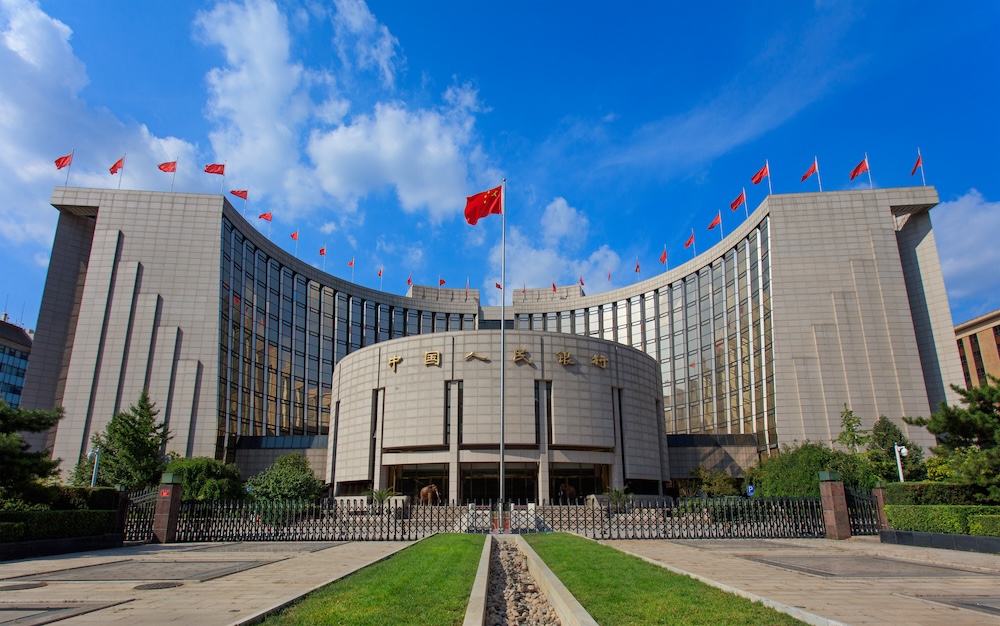
- Draft revision to the Law on the People’s Bank of China [中国人民银行法]. First enacted in 1995, this Law was only partially amended in 2003 to reflect its updated mandate following the establishment of the now-defunct China Banking Regulatory Commission. In October 2020, the People’s Bank of China (PBOC) sought public comment on an early draft of the revision, which would, among other things, strengthen the PBOC’s role in macroprudential regulation, the prevention and resolution of systemic financial risks, and supervision of systemically important financial institutions. We expect the bill to pass after three reviews. Although the Law was originally adopted by the full NPC, it is not yet clear whether the revision is headed to the full Congress as well.
- Draft decision authorizing Hong Kong to exercise jurisdiction over the Hong Kong side of the redeveloped Huanggang Port. Opened in 1989, the Huanggang Port [皇岗口岸] is a major point of entry on the Hong Kong–Shenzhen boundary and remains the only 24-hour land border crossing between the two cities. In 2019, Hong Kong and Shenzhen began redeveloping the Port at its original location in Shenzhen’s Futian District. As the two cities agreed to implement a co-location arrangement for the redeveloped Port—under which Hong Kong and Mainland immigration authorities will both set up checkpoints inside the Port building—NPCSC authorization is necessary for Hong Kong to exercise jurisdiction over the pertinent areas. This will be the fifth time that the NPCSC has granted a special administrative region jurisdiction over Mainland territory. Most recently in 2023, the NPCSC allowed Macao to control a plot of land in the mainland city of Zhuhai to build a new light rail station next to a Macao–Mainland border checkpoint. We expect the NPCSC to grant the authorization next week. The redeveloped Huanggang Port is expected to come into operation next month.