
Publication History (last major update: July 31, 2025)
Minor edits and formatting changes are not noted
June 25, 2018: First published; written by Shuhao Fan and edited by Changhao Wei and Xiaoyuan Zhang
June 21, 2021: Revised by Changhao Wei and Taige Hu to update all factual information and citation style, rewrite the section on legal inquiry responses, and add a new part on the LAC’s duties throughout lawmaking (focusing on its roles in constitutional enforcement and public communications), in addition to miscellaneous minor changes throughout
July 31, 2025: Revised by Changhao Wei and Taige Hu to update all factual information and substantially update the sections on the LAC’s legal status as well as its roles in ex ante constitutional review of draft laws and public communications, in addition to miscellaneous minor changes throughout
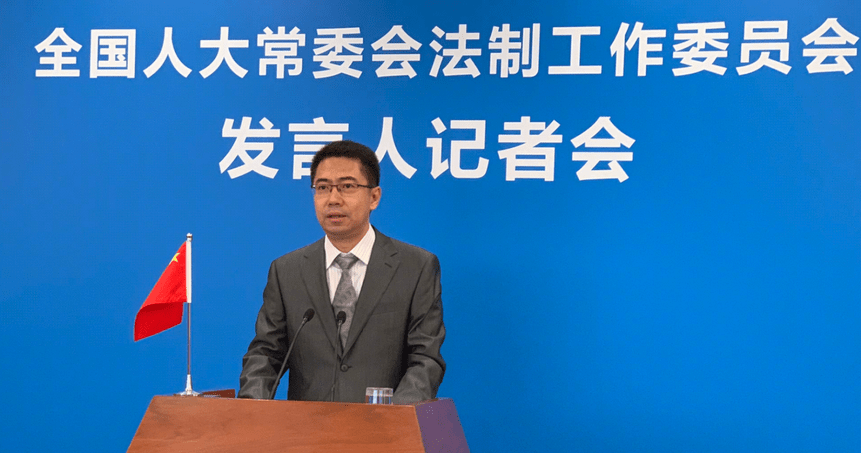
The Legislative Affairs Commission (LAC) [法制工作委员会] under China’s national legislature, the National People’s Congress (NPC) and its Standing Committee (NPCSC), is such a unique institution that one can hardly find an equivalent in another jurisdiction. Staffed primarily by unelected and unidentified members, the LAC works mostly behind closed doors, although recently it has become much more visible in the public eye. The LAC’s employees outnumber NPCSC members, and unlike the latter, they all work full-time and include more legal experts than the staff of any other NPC body.1 Their decisions play significant roles throughout the legislative process, from the agenda-setting stage to deliberations—and even after laws are enacted. One Chinese scholar thus aptly dubs the LAC staff “invisible legislators” [隐性立法者].2 Some worry that they may have usurped the powers of elected members of the legislature, thus becoming de facto legislators.3 Below, we provide an overview of the LAC—an essential yet peculiar institution under the Chinese legislature—and its roles in the legislative process.
Continue reading “The Legislative Affairs Commission of China’s National Legislature and Its “Invisible Legislators””