
China’s top legislature, the 14th NPC Standing Committee (NPCSC), will convene for its seventh session from December 25 to 29, the Council of Chairpersons decided on Monday, December 18. The session’s tentative agenda includes twelve legislative bills, which we preview below.
Returning Bills
Seven bills have been scheduled for further review.
First, the draft revision to the State Council Organic Law [国务院组织法] returns for its second reading. We expect the NPCSC to submit it to the 2024 NPC session for a final review and will publish a summary of the bill in the coming weeks.
Second, the draft revision to the Company Law [公司法] returns for its fourth—and, barring exceptional circumstances, final—review. Probably due to the Law’s broad impact on businesses and a newly added, controversial provision in the latest draft that would partially reverse a 2013 reform that has made it easier to start a company, the bill became one of the rare ones that did not pass after three reviews.
Third, the draft amendment to the Charity Law [慈善法] and the draft Law on Ensuring Food Security [粮食安全保障法] both return for their third review and are expected to pass.
Fourth, The the draft Criminal Law Amendment (XII) [刑法修正案(十二)] returns for its second review. With amendments to only seven Criminal Law articles, this bill, too, is expected to pass, unless it has been revised to include more extensive changes since July.
Finally, the draft Emergency Response and Management Law [突发事件应对法] and the draft Rural Collective Economic Organization Law [农村集体经济组织法] return for their second reading as well. We expect that an additional round of deliberations awaits both.
New Bills
Five new bills have been submitted for review.
(1) The Council of Chairpersons submitted a draft amendment to the Law on the Oversight by the Standing Committees of People’s Congresses at All Levels [各级人民代表大会常务委员会监督法]. Enacted in 2006, the Law governs the ways in which the standing committees of the people’s congresses conduct oversight of other state institutions. For instance, the Law regulates the use of various oversight tools, including hearing and deliberating special work reports, inspecting the enforcement of laws and regulations, conducting budgetary and economic oversight, and reviewing the validity of other state institutions’ legislation (a process called “recording and review” [备案审查]). In recent years, the NPCSC has noticeably strengthened its oversight through both procedural and substantive reforms, especially with respect to fiscal oversight and “recording and review,” and local people’s congresses have followed suit. The draft amendment is likely to codify some of those reforms. We expect the bill to pass after two or three reviews, depending on its scope.
(2) Relatedly, the Council also submitted a draft Decision on Improving and Strengthening the System of Recording and Review [关于完善和加强备案审查制度的决定]. “Recording and review” (R&R) is a distant cousin of constitutional review in other jurisdictions. It is an oversight tool employed by the NPCSC to ensure that lower-level legislation (such as local legislation) conforms not only to the Constitution, but also to national law and policy. Recent reforms have largely focused on R&R’s increasingly prominent role in ensuring the implementation of national law and policy, but Chinese citizens have nonetheless taken advantage of those reforms to (in many cases, successfully) advocate for their rights.
According to our sources, the Decision would introduce three key reforms. First, it would for the first time explicitly connect litigation and R&R, allowing courts and procuratorates to report problematic legislation (presumably both on their own initiative and at parties’ request) to national judicial authorities, which would then refer the requests they deem meritorious to the NPCSC for review. A litigant who succeeds in challenging a piece of legislation this way could then obtain direct relief while still in court. This kind of remedy is currently unavailable to citizens who successful invoke the R&R process, however, because any resulting legislative amendments or repeals cannot grant them retroactive relief.
Second, the Decision would explicitly incorporate the “principle of proportionality” [比例原则] into the standards for reviewing legislation, though the detail is not yet clear. Many jurisdictions have adopted proportionality as the legal standard for reviewing government intrusions on fundamental rights. It requires, in short, that such intrusions be justified and that “larger harms imposed by government should be justified by more weighty reasons.”
Third, the Decision would seem to create more opportunity for the NPCSC itself—and not just its Legislative Affairs Commission—to rectify rogue legislation. Beyond directly annulling a piece of problematic legislation (a drastic move that the NPCSC has never taken), the Decision would allow it to simply declare the legislation invalid and request the enacting body to rectify the error. While the Legislative Affairs Commission now issues the same kind of requests in practice, the NPCSC’s involvement would arguably give the process a lot more teeth.
We expect the NPCSC to approve the Decision next week. On a further related note, the NPCSC will also hear the Legislative Affairs Commission’s annual R&R report for 2023, which is expected to disclose new cases (hopefully including ones raising constitutional issues) and discuss future reforms.
The State Council submitted the remaining three bills.
(3) Draft revision to the Border Health and Quarantine Law [国境卫生检疫法]. This Law has not been meaningfully updated since its enactment in 1986 and was listed in the NPCSC’s special legislative plan on public health, adopted in response to the COVID-19 pandemic. The General Administration of Customs previously released a draft for public comment in mid-2020. According to the readout of the State Council meeting that approved the latest draft, the bill would strengthen the mechanisms for health inspections and quarantine at ports of entry and improve interagency coordination. The bill also seeks to balance such public health measures against the need to accelerate the resumption of “personnel, economic, and trade exchanges” in the post-“zero COVID” era. We expect the draft revision to pass after three reviews.
(4) Draft revision to the Mineral Resources Law [矿产资源法]. This Law was last substantively amended in 1996. In approving the draft submitted for review, the State Council emphasized that the revision is indispensable for “exploiting and protecting mineral resources as well as safeguarding the security of national strategic resources.” According to an earlier draft released by the Ministry of Natural Resources for public comment in late 2019, the revision would also reform the processes for granting mineral rights, require ecological restoration of mining areas, strengthen regulation of mining companies, and specify the fees for obtaining and exercising mineral rights, among other changes. We expect the bill to pass after three reviews.
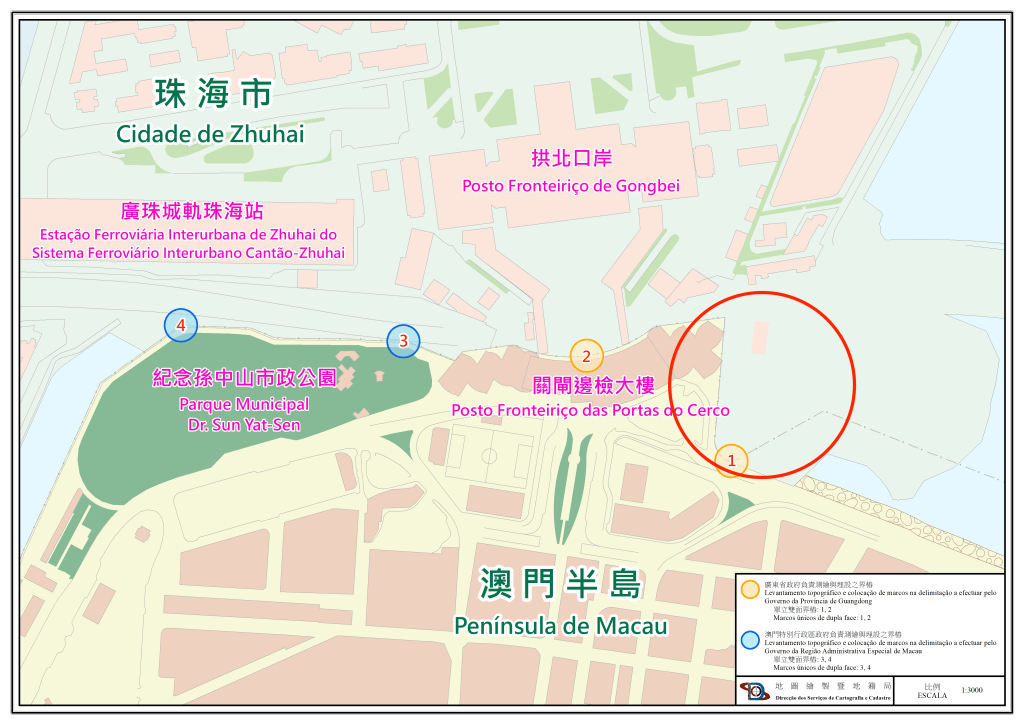
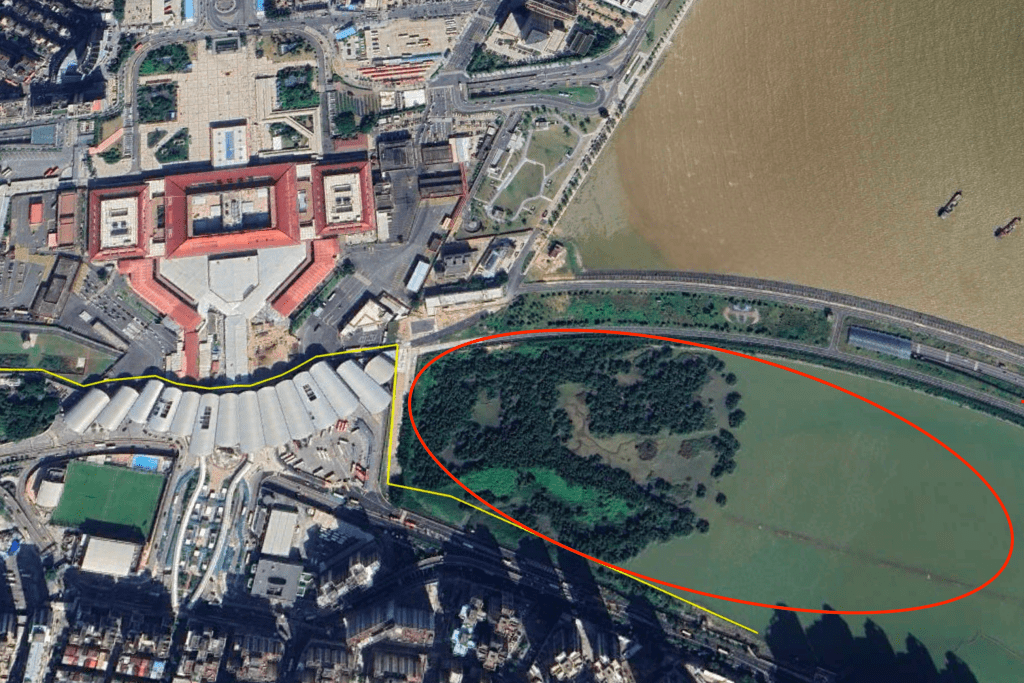
(5) Draft decision authorizing Macao to exercise jurisdiction over the “relevant land and sea areas southeast of the Gongbei Port [拱北口岸],” an immigration and customs checkpoint on the mainland-Macao border that is physically located in Zhuhai, Guangdong province. The Gongbei Port is the complex with red roofs in Figure 2 (above the (outdated) mainland-Macao border in yellow), and the red circle should cover at least part of the relevant areas under the authorization. It is so far unclear why Macao would want control over that region; maybe it plans to expand its Portas do Cerco checkpoint, the white building immediately south of the border and next to the area in question. This would not be the first time that the NPCSC allows a special administrative region to exercise jurisdiction over part of mainland territory. In 2019, for instance, it authorized Macao to control part of the renovated Hengqin Port, another checkpoint on the mainland-Macao border that is physically in the mainland, to facilitate cross-border travel. We expect the NPCSC to approve the draft decision at the upcoming session.
UPDATE (Dec. 19, 2023): A reader from Macao informed us that the Macao government had in fact requested to lease the 3,700-m2 V-shaped tidal flat immediately to the east of the Portas do Cerco checkpoint for use in constructing the East line of Macao’s light rail system. But where is the V-shaped area in the satellite image? It turns out that Google Earth uses an outdated version of the mainland-Macao boundary. It is obvious where that area is in the official map (Figure 1).
Next week, the NPCSC will also adopt a decision to convene the second session of the 14th NPC, expected to begin on March 5, 2024. One thing to watch is whether the decision will put personnel appointments on the session’s agenda, given the two vacant state councilor spots and one open seat on the Central Military Commission (created by Qin Gang’s and Li Shangfu’s removals earlier this year). If it does, then the Party’s Central Committee may meet in early 2024 to decide on the nominees, as it does before each quinquennial state leadership transition (most recently in February 2023).