
“Recording and review” (R&R) [备案审查] is an oversight tool used by the NPC Standing Committee (NPCSC) to rein in rogue legislation. The R&R process has two components: various rulemaking bodies must first “record” their enactments with the NPCSC, which may then “review” their validity on various grounds. The NPCSC may conduct review upon request, or may do so on its own initiative. In practice, its Legislative Affairs Commission (LAC) performs all reviews. Officially, R&R serves four goals: to carry out the Communist Party central leadership’s orders, to ensure implementation of the Constitution and national laws, to protect citizens’ lawful rights and interest, and to maintain the uniformity of the legal system.
For a long time R&R was criticized for being ineffective and opaque, but in recent years it has become more robust and accessible to the public. Most notably, R&R is becoming the NPCSC’s vehicle for cautiously pushing ahead with constitutional review. The NPCSC started hearing the LAC’s annual work reports on R&R in 2017, and the reports have been disclosing cases in which sub-statutory legislation failed review, some on constitutional grounds. We have been closely following the developments surrounding R&R and constitutional review. This page collects our writings on R&R and other relevant resources for easy reference.
The Basics
| Article | Notes |
|---|---|
 | Our overview of China’s recent invigoration of the R&R process in the Made in China Journal. You can download the essay as a PDF here. Here is an update to this essay from June 2023. |
 | Our analysis of the NPCSC’s landmark December 2023 Decision on Improving and Strengthening the System of Recording and Review [关于完善和加强备案审查制度的决定], crossposted from Verfassungsblog. |
 | Our most comprehensive, most technical introduction to R&R to date, based on the 2019 Working Measures for the Recording and Review of Regulations and Judicial Interpretations [法规、司法解释备案审查工作办法]. Please note that this post is now somewhat outdated as it does not reflect post-2020 developments, including the 2023 Decision. |
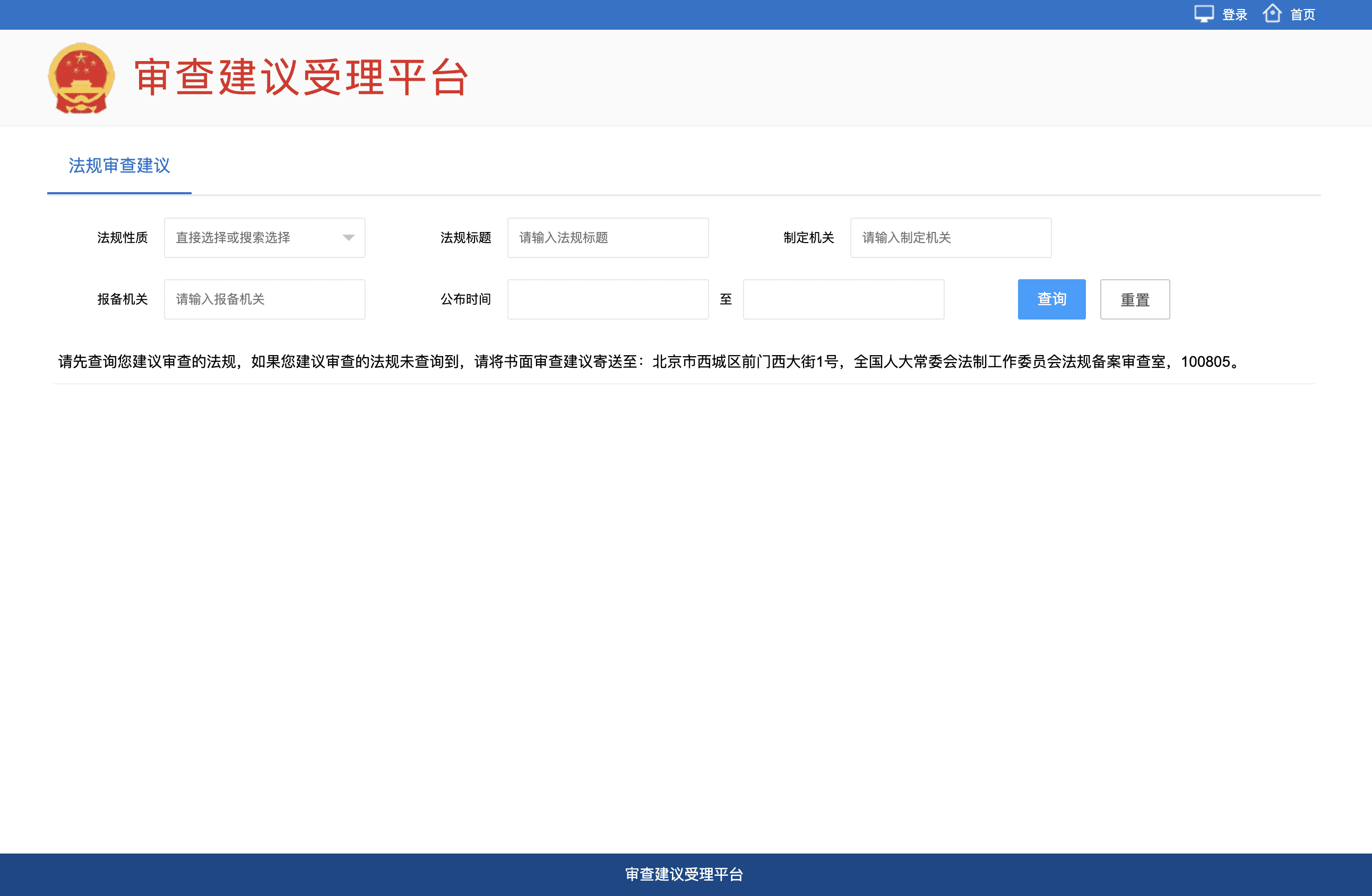 | Our guide to the NPCSC’s online platform where Chinese citizens and other private entities can submit requests for review. |
Cases
The following posts offer in-depth analysis of select R&R cases.
| Year & Post | Summary |
|---|---|
| 2024 Constitutional Social Rights vs. Collateral Consequences of Criminal Convictions  | Issues: (1) Whether a local government may prohibit individuals with criminal records from receiving minimum subsistence allowances. (2) Whether regulations may bar such individuals from engaging in certain occupations. Outcome: The LAC concluded that (1) such prohibition was inconsistent with the constitutional right to material benefit from the State and with the relevant State Council regulations; and (2) such prohibitions, if exceeding the limits of necessity and reasonableness, would infringe on the constitutional right to work. |
| 2023 China’s Top Legislation-Review Body Halts Local Governments’ Collective Punishment of Telecom Fraudsters’ Families 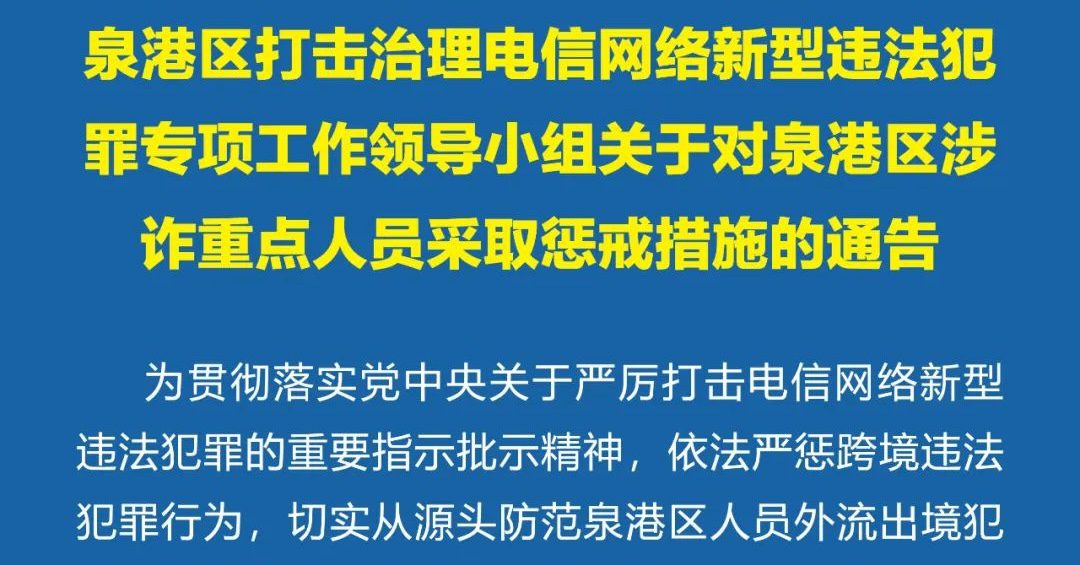 | Issue: Whether local governments may punish the family members of telecom fraudsters for the latter’s unlawful or criminal activities. Outcome: The LAC concluded that such collective punishment violated the “principles and spirits” of the provisions in Chapter II of the Constitution as well the “principles and spirits” of relevant national laws and administrative regulations. |
| 2023 Rectifying Local Legislative Encroachments on Homeowner Rights  | Issues: Whether local legislation may (1) condition homeowners’ exercise of their right of joint management on timely payments of property management fees; (2) transfer ownership of public utilities infrastructure located in residential compounds to utility companies; and (3) allow homeowners who have not yet moved into their new homes to pay 30% less in property management fees. Outcome: The LAC concluded that these provisions all violated the Civil Code. |
| 2022 Ensuring Single Women’s Equal Access to Maternity Insurance  | Issue: Whether Yunnan’s provincial regulations may deny single women access to maternity insurance. Outcome: The LAC answered in the negative, primarily on the grounds that such restriction no longer comported with the Communist Party’s decision to “optimize the birth policy” and related national reforms. It also added that the restriction was inconsistent with “the spirit of the relevant constitutional and statutory provisions.” |
| 2021 Invalidating Compulsory Parentage Testing as a Tool to Enforce Birth Quotas  | Issues: Whether provincial regulations may empower family planning authorities to (1) mandate parentage testing for individuals who are suspected of exceeding birth quotas; and (2) impose a fine when they refuse testing. Outcome: (1) The LAC concluded that the compulsory-testing provisions were invalid, although the exact rationale for its conclusion was unclear. It appears to have relied in part on the Constitution’s protections for personal dignity and for marriage, families, and children. (2) The LAC also concluded that the fines imposed for refusing compulsory parentage testing violated the principles of administrative law included in national laws. |
| 2017 & 2019 Removing the Vestiges of the One-Child Policy  | Issue: Whether provincial regulations may continue requiring employers to fire employees who exceed birth limits. Outcome: The LAC punted on the question whether those provisions violated the Labor Contracts Law as applied to private-sector employees. It instead concluded that the regulations no longer comported with the Communist Party's decision to embrace more inclusive reproductive policies and ordered the provinces to amend their regulations. |
| 2020 “Same Life, Different Values”  | Issue: Whether a 2003 Supreme People’s Court (SPC) interpretation that created different standards for compensating the deaths of urban and rural residents in personal injury cases violated the constitutional guarantee that all citizens are “equal before the law.” Outcome: The LAC did not answer this constitutional question, but concluded that the different standards should be abolished on policy grounds. It advised the SPC to accordingly amend the Interpretation after summarizing lessons from ongoing pilot programs to equalize compensation standards in personal injury cases. |
| 2020 Constitutionally Mandated Mandarin-Medium Education  | Issue: Whether local regulations may require ethnic schools to use the relevant ethnic languages as the sole medium of instruction (except in Mandarin classes). Outcome: The LAC concluded that these provisions violated the constitutional policy of promoting “the nationwide use of Putonghua” as well as two statutes, and ordered the relevant local legislatures to amend their regulations. |
| 2018 “Freedom and Privacy of Correspondence”  | Issue: Whether local regulations may authorize the traffic police to inspect the communications records of motorists who are involved in traffic accidents. Outcome: The LAC concluded that these provisions violated the constitutional “freedom and privacy of correspondence” and ordered the relevant local legislatures to amend their regulations. |
| 2018 The Last Days of “Custody & Education”  | Issue: Whether “custody and education,” an extrajudicial detention system targeting sex workers and their clients, violated the Constitution. Outcome: The LAC concluded that it was constitutional but recommended its abolition on policy grounds. |
| 2017 Are Parrots Bred in Captivity Still “Wild”?  | Issue: Whether a 2000 Supreme People’s Court interpretation permissibly read “rare and endangered wild animals” as used in the Criminal Law to include artificially bred individuals of protected species. Outcome: The LAC concluded that the Interpretation was proper when first issued, but that it should be amended to treat defendants who trade in artificially bred animals more leniently. |
| 2017 The Demise of “Conditional Arrest”  | Issue: Whether the Supreme People’s Procuratorate (SPP) may authorize the “conditional arrests” of criminal suspects. Outcome: The LAC concluded that the standards for conditional arrests were inconsistent with standards for arrests under the Criminal Procedure Law, and ordered the SPP to discontinue the practice. |
Reports
The LAC’s annual reports on R&R (available in Chinese only) include statistics on the normative documents that are recorded, reviewed, and rectified each year; disclose additional R&R cases we have not covered in-depth; and discuss the LAC’s priorities relating to R&R in the upcoming year.
| NPCSC | Year | Report | Our Coverage* |
|---|---|---|---|
| 14th | 2025 | HTML | Coming soon... |
| 2024 | PDF, HTML | HTML | |
| 2023 | PDF, HTML | HTML | |
| 13th | 2022 (covering 2018–22) | PDF, HTML | — |
| 2021 | PDF, HTML | ||
| 2020 | PDF, HTML | ||
| 2019 | PDF, HTML | ||
| 2018 | PDF, HTML | ||
| 12th | 2017 (covering 2013–17) | PDF, HTML |