
Dissecting the Chinese Legislature’s First Annual Report on Constitutional Enforcement

China’s national legislature, the National People’s Congress (NPC) and its Standing Committee (NPCSC), has the constitutional power and duty to “oversee the enforcement of the Constitution.” Yet for decades this task had remained a low priority for the legislature. Since Xi Jinping took power in late 2012, he has “elevated the Party’s rhetorical commitment to the Constitution” on numerous occasions. For instance, in writing to commemorate the current Constitution’s 40th anniversary in December 2022, Xi stressed the need to “continuously enhance constitutional enforcement and supervision”—and to, of course, do so under the Party’s leadership. Against this backdrop, the NPCSC has made constitutional enforcement a more significant and visible part of its work; its annual work reports to the NPC have included dedicated sections on “constitutional enforcement” [宪法实施]1 since 2020.

On February 23, possibly starting a new yearly practice, the legislature posted on its official website a report on its efforts to “strengthen and innovate constitutional enforcement” in 2023, written by the NPCSC Legislative Affairs Commission’s Office for Constitution.2 The report is worth reading for it not only discloses new constitutional practices from the past year that may have escaped most people’s attention, but also catalogs the kinds of activities that officially constitute “constitutional enforcement.” The report also likely serves as the basis for the section in the NPCSC’s forthcoming 2024 work report on constitutional enforcement. Below, we will discuss the report through a mix of summary and translation: parts that we found particularly noteworthy will be translated and annotated, whereas the rest will be summarized to varying extents. We added some paragraph breaks and text formatting in blockquotes to improve readability.

Continue reading “Dissecting the Chinese Legislature’s First Annual Report on Constitutional Enforcement”

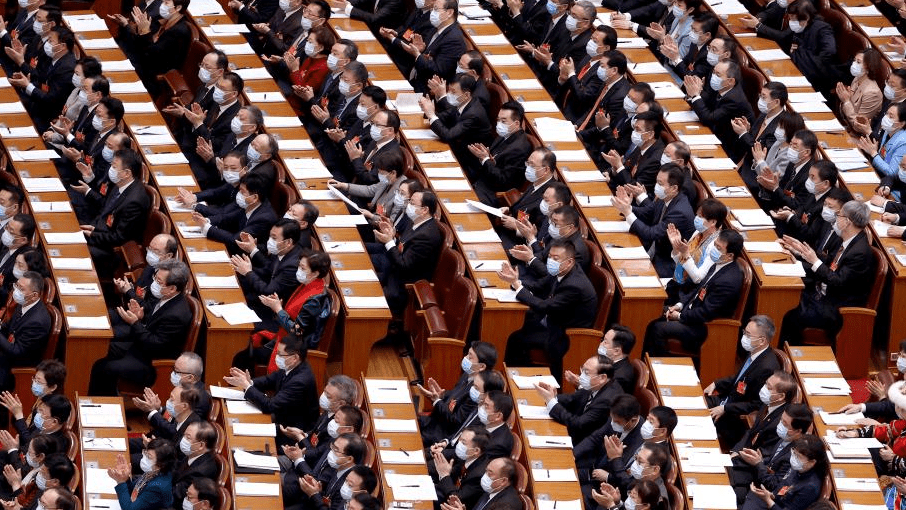
NPC 2024: Agenda and Daily Schedule

China’s National People’s Congress (NPC) has released its 2024 session’s agenda and daily schedule of meetings, as well as a preliminary schedule of press events during the session. This year’s session will open on the morning of March 5 and close on the afternoon of March 11, lasting seven full days, consistent with Covid-era norms. But in a break with long-standing tradition, and for the first time since 1993, the premier will not hold a press conference after this session, or during the reminder of this NPC’s term “absent special circumstances,” a spokesperson announced on March 4.

All times below are in China Standard Time (UTC +8:00). For a primer on the NPC and its annual sessions, check out this FAQ.

Continue reading “NPC 2024: Agenda and Daily Schedule”

NPC Calendar: March 2024

Here is our recap of NPC-related events in March 2024 at our monthly newsletter.

The Criminal Law Amendment (XII) [刑法修正案(十二)] (adopted on Dec. 29, 2023) takes effect on March 1.

China’s 14th National People’s Congress (NPC) will convene for its second session on Tuesday, March 5. The session’s tentative agenda includes the following items:

  • Deliberate the Government Work Report;
  • Deliberate work reports by the NPC Standing Committee, the Supreme People’s Court, and the Supreme People’s Procuratorate;
  • Review a report on the implementation of the 2023 Plan for National Economic and Social Development and on the draft 2024 Plan for National Economic and Social Development; and review the draft 2024 Plan for National Economic and Social Development;
  • Review a report on the execution of the 2023 Central and Local Budgets and on the draft 2024 Central and Local Budgets; and review the draft 2024 Central and Local Budgets; and
  • Deliberate a draft revision to the State Council Organic Law [国务院组织法].

On March 4, the NPC session will convene for a preparatory meeting to select members of the Presidium (an ad hoc body of around 170 members that will preside over the session) and to finalize the session’s agenda. The Presidium will then immediately meet to decide on the session’s daily schedule and designate a spokesperson. Shortly thereafter the session is expected to hold its first press conference.

If the NPC is going to fill the vacancies on the State Council and the Central Military Commission created by the removal of Qin Gang and Li Shangfu last year, such an agenda item is expected to be first revealed on March 4, either at the press conference or through the session’s agenda and daily schedule.

The NPC’s 2024 session will likely close on March 11, based on a recent notice from the Beijing police on controlling the use of certain low-flying aircraft during the event. All reports and bills submitted for review are expected to be approved on the last day.

NPCSC Session Watch: NPC Preparations and State Secrets Law Revisions

UPDATE (Feb. 27, 2024): The NPCSC on February 27 approved the revision to the Law on Guarding State Secrets, which will take effect on May 1, 2024. An English translation of the revised Law and a Chinese comparison chart are accessible from the bill page.

China’s top legislature, the 14th NPC Standing Committee (NPCSC), will convene for its eighth session from February 26 to 27, the Council of Chairpersons decided on Wednesday, February 7.

As expected, this two-day meeting will primarily make preparations for the NPC’s 2024 session, scheduled to open on March 5. In addition to discussing its annual work report to the NPC, the NPCSC will review a proposed itemized agenda for the 2024 NPC session, among other preparatory matters.

Continue reading “NPCSC Session Watch: NPC Preparations and State Secrets Law Revisions”

Explainer: What Happens to the Delegate Bills Introduced During Annual NPC Sessions?

China’s national legislature, the National People’s Congress (NPC), will convene for its 2024 session in just a month. Such annual gatherings offer the NPC’s almost 3,000 delegates a yearly window to introduce “bills” [议案]. A bill is sponsored by 30 or more delegates or by a delegation, and calls on the legislature itself—not any other Party-state institution—to perform an act, legislative or otherwise. The vast majority of bills have been “legislative bills” [法律案]—that is, they propose to enact, amend, repeal, interpret, or codify laws. During the last two NPCs (2013–2022), the delegates introduced an average of 465 bills per year and all but a few (~98%) were legislative bills.1

Continue reading “Explainer: What Happens to the Delegate Bills Introduced During Annual NPC Sessions?”

NPC Calendar: February 2024

Here is our recap of NPC-related events in February 2024 at our monthly newsletter.

The 14th NPC Standing Committee (NPCSC) will convene for its 8th session in late February. The Council of Chairpersons is expected to meet shortly after the Lunar New Year holiday (which ends on February 17) to decide on the agenda and dates of the session.

The NPCSC will primarily make preparations for the 2024 NPC session at its upcoming meeting, but may still review one or two legislative bills. Possible candidates include:

This post was updated on January 31, 2024 at 19:05 ET to add the draft Energy Law and Accounting Law amendment to the list of potential bills to be reviewed.